
Exploring the night sky has fascinated humanity for thousands of years, and modern optical instruments have made this pursuit more accessible than ever before. While telescopes often steal the spotlight, binoculars offer unique advantages that many stargazers overlook completely.
The best astronomy binoculars provide an incredible gateway into celestial observation with their portability, ease of use, and immersive wide-field views that telescopes simply cannot replicate. Whether you want to trace the craters on the moon, scan the Milky Way for star clusters, or catch a passing comet, quality astronomy binoculars deliver stunning results without complicated setup procedures.
| Preview | Product | |
|---|---|---|

|
Celestron SkyMaster 15x70 Astronomy... | Check Price Here |

|
Celestron – SkyMaster Pro 20x80 Binocular... | Check Price Here |

|
Celestron SkyMaster 25x100 Binoculars –... | Check Price Here |

|
Celestron - Cometron 7x50 Astronomy... | Check Price Here |

|
Celestron SkyMaster 12x60 Binoculars –... | Check Price Here |
This comprehensive guide walks you through top-rated models that astronomers and hobbyists consistently recommend for exploring the wonders above.
How Impact Best Astronomy Binoculars
Investing in quality astronomy binoculars fundamentally changes how you experience the night sky and celestial events. These optical instruments gather significantly more light than your naked eyes can collect, revealing celestial objects that remain invisible otherwise. The moon transforms from a simple bright disc into a landscape of craters, mountains, and ancient lava plains called maria.
Star clusters like the Pleiades suddenly reveal dozens of individual stellar members rather than appearing as a fuzzy patch of light. The Andromeda Galaxy becomes visible as a genuine extended object rather than just another faint star in the constellation. Jupiter’s four largest moons appear as tiny pinpoints flanking the brilliant planet, recreating the discovery Galileo made centuries ago.
Beyond individual object viewing, astronomy binoculars excel at scanning large swaths of sky quickly and efficiently. This capability proves invaluable when searching for comets, tracking satellite passes, or simply learning your way around unfamiliar constellations. The wide field of view provides context that narrow telescope views cannot match easily.
Portability represents another significant advantage that impacts how often you actually observe the night sky. Unlike telescopes requiring setup time and dedicated space, binoculars grab-and-go convenience encourages spontaneous observing sessions. Clear skies appear unexpectedly, and having binoculars ready means capitalizing on every opportunity.
The learning curve for astronomy binoculars remains remarkably gentle compared to telescopes with their various eyepieces, mounts, and alignment requirements. Point your binoculars toward something interesting, focus the center wheel, and start exploring immediately. This accessibility makes them perfect for sharing astronomy with friends and family.
What is Best Astronomy Binoculars
Understanding what makes astronomy binoculars exceptional requires examining several key specifications that directly impact observing performance. Aperture, measured in millimeters as the second number in binocular designations, determines light-gathering capability more than any other factor. Larger objective lenses collect more photons from faint celestial sources.
Magnification power appears as the first number and brings objects closer while narrowing your field of view proportionally. Higher magnification reveals more detail but also amplifies hand tremor and requires tripod mounting for comfortable extended viewing. Most astronomers consider 7x through 15x optimal for handheld use.
Optical quality matters tremendously because inferior glass and coatings waste the light your objective lenses work hard to gather. Multi-coated optics reduce internal reflections while BaK-4 prisms deliver superior image brightness compared to cheaper BK-7 alternatives. These technical differences translate directly into sharper, brighter views.
Exit pupil size affects how bright objects appear, calculated by dividing aperture by magnification. A 7×50 binocular produces a 7.1mm exit pupil matching fully dilated human pupils in darkness. Larger exit pupils generally mean brighter images for astronomical viewing conditions.
Field of view determines how much sky you see simultaneously, usually expressed in degrees or feet at a distance. Wide fields facilitate star-hopping navigation and allow viewing entire star clusters within single views. The products below represent excellent choices across various budget ranges.
- Celestron SkyMaster 15×70
- Celestron SkyMaster Pro 20×80
- Celestron SkyMaster 25×100
- Celestron SkyMaster 20×80
- Celestron Cometron 7×50
- Celestron SkyMaster 12×60
- Nikon Aculon A211 10×50
- Orion GiantView 25×100
- Orion 20×80 Astronomical
- Celestron UpClose G2 10×50
- Celestron Nature DX 12×56
- Vortex Crossfire HD 10×50
Comparison Table of Best Astronomy Binoculars
| Product Name | Magnification | Aperture |
|---|---|---|
| Celestron SkyMaster 15×70 | 15x | 70mm |
| Celestron SkyMaster Pro 20×80 | 20x | 80mm |
| Celestron SkyMaster 25×100 | 25x | 100mm |
| Celestron SkyMaster 20×80 | 20x | 80mm |
| Celestron Cometron 7×50 | 7x | 50mm |
| Celestron SkyMaster 12×60 | 12x | 60mm |
| Nikon Aculon A211 10×50 | 10x | 50mm |
| Orion GiantView 25×100 | 25x | 100mm |
| Orion 20×80 Astronomical | 20x | 80mm |
| Celestron UpClose G2 10×50 | 10x | 50mm |
| Celestron Nature DX 12×56 | 12x | 56mm |
| Vortex Crossfire HD 10×50 | 10x | 50mm |
9 Best Astronomy Binoculars : Stargazer’s Pick
Celestron SkyMaster 15×70
Celestron SkyMaster 15x70 Astronomy...
Large aperture porro prism binoculars have become synonymous with affordable astronomical observation, and this model exemplifies why stargazers worldwide trust the SkyMaster line. The 70mm objective lenses gather impressive amounts of light, revealing celestial objects that smaller binoculars cannot show clearly. Astronomers consistently praise these binoculars for delivering telescope-like performance in a portable package.
The 15x magnification strikes an excellent balance between bringing celestial objects close and maintaining usable handheld stability for brief observations. However, extended viewing sessions definitely benefit from tripod mounting using the included adapter. Multi-coated optics enhance light transmission while BaK-4 prisms produce sharp images with good contrast throughout the field.
Lunar observation through these binoculars reveals countless craters along the terminator line where sunlight creates dramatic shadows. Star clusters like the Pleiades display dozens of individual stellar members rather than the fuzzy patch visible to naked eyes. The Orion Nebula shows its characteristic shape and subtle cloudiness surrounding the central stars.
Rubber armor protects internal components from accidental impacts while providing secure grip during nighttime observations. Long eye relief accommodates eyeglass wearers comfortably without forcing them to remove corrective lenses. A large center focus wheel operates smoothly even when wearing gloves during cold observing sessions outdoors.
Top Features
- Large 70mm objective lenses gather maximum starlight for bright views of faint celestial objects.
- High-quality BaK-4 prisms produce sharp images with enhanced contrast and minimal aberration.
- Multi-coated optics increase light transmission for brighter overall viewing experience.
- Included tripod adapter enables stable mounted observation during extended sessions.
- Long eye relief design accommodates comfortable viewing with or without eyeglasses.
“Celestron’s SkyMaster Series of large aperture binoculars are a phenomenal value for high performance binoculars ideal for astronomical viewing.”
Celestron SkyMaster Pro 20×80
Celestron – SkyMaster Pro 20x80 Binocular...
Professional-grade optics elevate stargazing experiences significantly with this premium model featuring superior coatings and construction quality. The massive 80mm objective lenses provide exceptional light-gathering capability that reveals faint deep-sky objects invisible through smaller apertures. Celestron’s proprietary XLT coating technology maximizes light transmission throughout the optical path.
Every air-to-glass surface receives fully multi-coated treatment ensuring minimal light loss and maximum image brightness. The 20x magnification delivers impressive close-up views while still providing reasonable stability when briefly used handheld. However, serious astronomical observation requires tripod mounting for shake-free viewing of detailed lunar features.
BaK-4 prisms combined with precise internal baffling produce crisp, high-contrast images with excellent resolution across the field. Stars snap into tight focus points while extended objects like nebulae display subtle structure and shading variations. Jupiter’s moons become clearly visible as distinct points flanking the brilliant planet disc.
The built-in tripod adapter includes an RSR rail for attaching optional red-dot finderscopes that dramatically simplify locating celestial targets. Waterproof and nitrogen-purged construction ensures reliable performance regardless of weather conditions encountered during observing sessions. Rubber armor protects against everyday wear while providing secure grip.
Top Features
- Huge 80mm objective lenses provide exceptional light-gathering for observing faint deep-sky objects.
- Celestron XLT coating technology maximizes light transmission across all optical surfaces.
- Built-in RSR rail allows attachment of red-dot finder for rapid target acquisition.
- Waterproof nitrogen-purged construction ensures reliable all-weather performance.
- Premium BaK-4 prisms deliver professional-grade image quality and contrast.
“The view through a SkyMaster Pro is second to none at this price point with tremendous light-gathering capabilities.”
Celestron SkyMaster 25×100
Celestron SkyMaster 25x100 Binoculars –...
Giant aperture binoculars approach telescope-level performance while maintaining the wide-field immersive experience unique to binocular observation. These massive 100mm objectives drink in starlight like nothing else in the binocular world, revealing celestial wonders that smaller instruments cannot show. The 25x magnification brings distant targets impressively close.
Structural reinforcement ensures secure optical alignment despite the substantial size and weight of these serious astronomy instruments. Enhanced mounting hardware maintains precise collimation that inferior large binoculars often lose through normal handling. BaK-4 prisms and multi-coated optics work together for bright, sharp viewing.
The Orion Nebula displays its full glory with clearly visible structure and the central Trapezium star cluster resolved into individual components. Globular clusters reveal granular texture rather than appearing as simple fuzzy spots. Galaxies beyond the Milky Way show their extended nature with hints of spiral structure under dark skies.
Tripod mounting becomes absolutely mandatory with binoculars this large, as handheld observation proves completely impractical. The integrated adapter attaches to any standard photographic tripod using quarter-inch threads. A substantial carrying case protects your investment during transportation to dark sky observing sites.
Top Features
- Massive 100mm objectives provide exceptional light-gathering rivaling small telescope performance.
- Powerful 25x magnification reveals lunar surface details and separates close star clusters.
- Enhanced structural reinforcement maintains precise optical alignment during use.
- BaK-4 prisms combined with multi-coated optics deliver bright high-contrast images.
- Integrated heavy-duty tripod adapter connects to standard photographic tripods securely.
“Giant aperture binoculars for deep-sky astronomy and long-distance viewing that astronomers have praised for decades.”
Celestron SkyMaster 20×80
High-power magnification meets generous aperture in this popular model that bridges the gap between casual stargazing and serious astronomical observation. The 80mm objective lenses gather impressive starlight while the 20x magnification brings celestial targets close enough for detailed examination. This combination reveals lunar craters, star clusters, and bright nebulae beautifully.
BaK-4 prisms maximize light throughput while multi-coated optics enhance contrast throughout the viewing experience. Stars snap into tight focus points across most of the field, with only minor softening at the extreme edges typical of porro prism designs. The Pleiades star cluster displays its full complement of visible members dramatically.
Rubber armor protects internal optics from accidental impacts while providing secure grip during cold nighttime observations. Long eye relief accommodates eyeglass wearers comfortably without requiring lens removal for viewing. The large center focus wheel operates smoothly even when wearing gloves.
Weight requires tripod mounting for extended comfortable viewing, though brief handheld glimpses remain possible for particularly steady observers. The included adapter connects to any standard tripod using quarter-inch threads. A padded carrying case protects during transportation to observing locations.
Top Features
- Large 80mm objective lenses provide excellent light-gathering for viewing faint celestial objects.
- Powerful 20x magnification reveals lunar surface details and planetary features impressively.
- BaK-4 prisms and multi-coated optics deliver bright high-contrast astronomical images.
- Built-in tripod adapter enables stable mounted viewing for shake-free observation.
- Long eye relief design accommodates comfortable viewing with corrective eyeglasses.
“High-power binoculars for astronomy and long-range terrestrial viewing with large aperture BaK-4 prisms included.”
Celestron Cometron 7×50
Celestron - Cometron 7x50 Astronomy...
Entry-level astronomy binoculars should provide genuine celestial views without breaking budgets, and this model delivers exactly that promise consistently. The 7×50 configuration represents a classic astronomical format with a massive 7.1mm exit pupil ideal for dark-adapted viewing. Wide field of view encompasses substantial sky area for scanning and exploring.
Large 50mm objective lenses gather sufficient light for enjoyable views of the moon, bright star clusters, and occasional comets passing through the solar system. Multi-coated optics enhance brightness and contrast while the rubberized aluminum housing provides durability. The lightweight construction encourages frequent spontaneous use.
Lunar observation reveals the major maria regions, larger craters, and the dramatic terminator line separating light from shadow. The Pleiades star cluster displays its characteristic blue-white brilliance with individual stars becoming visible. Scanning the Milky Way reveals countless additional stars invisible to naked eyes.
The wide 6.6-degree field of view makes these binoculars particularly valuable for learning constellations and star-hopping navigation techniques. Tripod adaptability allows mounted observation during extended sessions or when sharing with others. A carrying case and neck strap complete the included accessories.
Top Features
- Wide 6.6-degree field of view reveals larger portions of the night sky for easy exploration.
- Large 50mm objective lenses gather ample light for bright views of celestial objects.
- Multi-coated optics increase light transmission for enhanced brightness and contrast.
- Lightweight rubberized aluminum construction provides durability without excessive weight.
- Tripod-adaptable design allows stable mounted observation during extended viewing sessions.
“If you are looking for a very inexpensive entry to the joy of binocular skywatching, you can’t do better than Celestron’s Cometron 7×50.”
Celestron SkyMaster 12×60
Celestron SkyMaster 12x60 Binoculars –...
The 12×60 configuration occupies a sweet spot between compact handheld binoculars and larger tripod-mandatory instruments for astronomical use. Strong magnification brings celestial objects impressively close while 60mm objectives gather sufficient light for bright detailed views. This balance makes them versatile performers across various observing scenarios.
BaK-4 prisms and multi-coated optics deliver sharp images with good contrast from edge to edge across the field of view. Lunar craters display impressive detail along the terminator while star clusters reveal individual stellar members clearly. The Orion Nebula shows its characteristic cloudiness surrounding the bright central region.
Rubber armor protects internal components while providing secure grip during cold nighttime observing sessions outdoors. The protective covering withstands occasional bumps and minor impacts without damaging the precision optical assembly inside. Long eye relief accommodates eyeglass wearers comfortably.
Tripod compatibility allows mounting for extended observations when arm fatigue becomes problematic during longer sessions. However, reasonably steady observers can manage brief handheld views without excessive shake affecting image quality. A carrying case protects during storage and transportation.
Top Features
- Strong 12x magnification brings celestial objects close for detailed examination.
- 60mm objective lenses collect ample light for bright views of faint celestial targets.
- BaK-4 prisms deliver sharp images with enhanced contrast throughout the field.
- Multi-coated optics maximize light transmission for brighter overall viewing experience.
- Tripod-compatible design enables stable mounted observation during longer sessions.
“The Celestron SkyMaster 12×60 binoculars offer strong magnification and objective lenses which allows plenty of light collection during viewing of faint celestial objects.”
Nikon Aculon A211 10×50

Whitney Joan / Kramer Alex C / David MacK
Legendary Nikon optical quality becomes accessible at an affordable price point with this versatile performer suitable for both astronomical and terrestrial observation. Aspherical eyepiece lenses reduce distortion and deliver sharper images across the field of view compared to standard designs. The 10×50 format provides classic astronomical performance.
Multi-coated optics ensure bright clear views whether observing celestial objects at night or terrestrial subjects during daylight hours. Turn-and-slide rubber eyecups accommodate eyeglass wearers while providing comfortable viewing for those without corrective lenses. The ergonomic design with textured rubber surfaces provides secure handling.
Central focus adjustment operates smoothly for quick transitions between near and far targets without hesitation or binding. A 6.5-degree field of view provides excellent context for locating and observing celestial objects effectively. Lunar observation reveals impressive surface detail including craters and mountain ranges.
Tripod adaptability allows mounting for steadier views when extended observation demands maximum stability. The lightweight construction reduces fatigue during handheld use while remaining substantial enough for confident handling. These binoculars excel for beginning astronomers while remaining useful for experienced observers.
Top Features
- Aspherical eyepiece lenses reduce distortion for sharper images across the entire field of view.
- Multi-coated optics maximize light transmission for bright clear celestial and terrestrial viewing.
- Turn-and-slide rubber eyecups accommodate both eyeglass wearers and naked-eye observers.
- Ergonomic rubber-armored body provides secure grip and protection during outdoor use.
- Versatile 10×50 configuration balances magnification against handheld stability effectively.
“The Nikon 10×50 Aculon A211 binoculars represent excellent value for money with razor-sharp optics achieving a 6.5-degree field of view.”
Orion GiantView 25×100
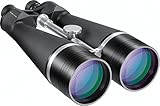
Orion GiantView 25x100 Astronomy Binoculars...
Serious deep-sky observation demands serious aperture, and this premium model delivers exceptional light-gathering capability in a wonderfully well-made package. The top-quality BAK-4 prisms and precise internal baffling ensure sharp images with pleasing contrast throughout extended observation sessions. Structural reinforcement maintains optical alignment.
Cross-reinforced binocular barrels with aluminum rod and objective cell cuffs provide maximum structural rigidity. This engineering ensures unflinching optical alignment even when repositioning the substantial instrument repeatedly. Fully multi-coated optics maximize the light collected by those massive 100mm objectives.
The Orion Nebula displays stunning detail with clearly visible structure surrounding the bright central Trapezium region. Globular clusters like M13 reveal their characteristic granular texture rather than appearing as simple fuzzy spots. Open clusters display dozens of individual stellar members dramatically.
A captive sliding tripod adapter with quarter-inch threads connects securely to standard photographic mounts. Tripod mounting becomes absolutely essential given the substantial size and high magnification of these serious astronomy binoculars. The views absolutely justify the additional setup requirements.
Top Features
- Massive 100mm objectives provide exceptional light-gathering for revealing faint deep-sky objects.
- Top-quality BAK-4 prisms and precise baffling ensure sharp high-contrast astronomical images.
- Cross-reinforced construction maintains precise optical alignment despite substantial size.
- Fully multi-coated optics maximize light transmission throughout the optical path.
- Captive sliding tripod adapter enables secure mounting on standard photographic equipment.
“The GiantView 25×100 is a wonderfully well made binocular with top-quality BAK-4 prisms ensuring sharp images and pleasing contrast.”
Orion 20×80 Astronomical

Orion 20x80 Astronomical Binocular & XHD...
Outstanding views at accessible prices remain achievable with this dedicated astronomical model featuring high-transmission optics and generous aperture. The 80mm objective lenses combined with 20x magnification produce close-up views of celestial targets that impress even experienced observers. Fully multi-coated optics maximize brightness.
BAK-4 porro prisms deliver the best image quality possible at this price point, ensuring crisp stars and detailed lunar surface features. Views of the Pleiades and Orion Nebula prove outstanding, revealing structure and individual stellar members clearly. Star clusters display their full complement of visible members.
The relatively narrow 3.2-degree field of view concentrates magnification power on specific celestial targets rather than wide-field scanning. This focus makes detailed observation of individual objects particularly rewarding. Lunar craters along the terminator display dramatic three-dimensional depth.
Tripod mounting becomes necessary for comfortable extended viewing given the substantial weight of these serious astronomy instruments. An integrated heavy-duty adapter connects securely to standard photographic tripods. The stable mounted experience justifies the additional setup requirements.
Top Features
- Large 80mm aperture objectives gather substantial light for bright views of faint celestial objects.
- High-transmission BAK-4 porro prisms deliver crisp images with excellent contrast.
- Fully multi-coated optics maximize light transmission throughout the optical system.
- Powerful 20x magnification reveals detailed lunar surface features and planetary moons.
- Integrated heavy-duty tripod adapter enables stable mounted astronomical observation.
“With high-transmission BAK-4 porro prisms and fully multi-coated optics, these binoculars will astound with views rivaling a small telescope.”
Celestron UpClose G2 10×50
Budget-conscious beginners deserve quality optics that deliver genuine astronomical views without significant financial investment. This affordable model provides excellent value while performing respectably for casual stargazing and lunar observation. The 10×50 configuration represents a classic format suitable for handheld use.
Multi-coated optics improve light transmission while BK-7 prisms keep costs accessible for those just beginning their astronomical journey. Lunar observation reveals major surface features including prominent craters and the dark maria regions. Star clusters display their characteristic appearance with individual members becoming visible.
The lightweight construction encourages frequent use without arm fatigue developing during extended handheld sessions. Rubber armor protects internal components while providing comfortable secure grip during nighttime observations. Central focus operates smoothly for rapid adjustment.
Tripod compatibility allows mounting when steadier views become desirable during longer observation sessions or sharing with others. These binoculars prove particularly valuable for learning constellation patterns and practicing star-hopping navigation techniques. A carrying case protects during storage and transportation.
Top Features
- Affordable pricing makes genuine astronomical observation accessible for budget-conscious beginners.
- Multi-coated optics improve light transmission for brighter views than basic alternatives.
- Lightweight construction enables comfortable extended handheld use without fatigue.
- Classic 10×50 configuration provides versatile performance for various observing scenarios.
- Tripod-compatible design allows stable mounted observation when desired.
“The moon looks amazing through these binoculars, easily fitting into the view, making them excellent affordable skywatching binoculars for beginners.”
Celestron Nature DX 12×56
Premium optical quality meets versatile performance in this exceptional model suitable for serious astronomy and demanding terrestrial observation equally well. Extra-low dispersion glass elements reduce chromatic aberration for sharper images with more accurate color reproduction. The 12×56 configuration provides excellent balance.
Fully multi-coated optics maximize light transmission while phase-corrected BaK-4 roof prisms deliver superior image quality compared to lesser alternatives. Waterproof construction with nitrogen purging ensures reliable performance regardless of weather conditions encountered during observing sessions outdoors.
Lunar observation reveals impressive surface detail including crater walls and ray systems extending from impact sites. Star clusters display individual members clearly while the Orion Nebula shows its characteristic extended structure. Planets appear as distinct discs rather than mere points.
The relatively compact roof prism design reduces bulk compared to porro prism alternatives while maintaining excellent optical performance. Twist-up eyecups accommodate eyeglass wearers comfortably. A quality harness and padded case complete the included accessories.
Top Features
- Extra-low dispersion glass reduces chromatic aberration for sharper more colorful images.
- Fully multi-coated optics maximize light transmission throughout the optical system.
- Phase-corrected BaK-4 roof prisms deliver superior image quality and brightness.
- Waterproof nitrogen-purged construction ensures reliable all-weather outdoor performance.
- Compact roof prism design reduces bulk while maintaining excellent optical quality.
“The Celestron Nature DX 12×56 binoculars offer excellent value for serious observers wanting premium optical quality.”
Vortex Crossfire HD 10×50
Rugged construction meets optical excellence in this premium model designed to withstand demanding outdoor adventures while delivering stunning views. HD optical system reduces chromatic aberration while maximizing resolution and color fidelity. The rubber armor absorbs impact shock effectively.
Fully multi-coated lenses increase light transmission while dielectric coatings enhance brightness and color accuracy throughout the viewing experience. BaK-4 roof prisms provide superior image quality compared to lesser prism types. The adjustable eyecups twist up for precise eye placement.
Waterproof and fogproof construction with O-ring seals and argon purging ensures reliable performance in challenging environmental conditions. The tripod-adaptable design allows stable mounting during extended observation sessions. A quality harness and padded case provide carrying convenience.
The 10×50 configuration delivers versatile performance suitable for astronomical observation and daytime nature watching equally well. Lunar surface detail impresses while star clusters reveal individual members clearly. The wide field facilitates constellation recognition.
Top Features
- HD optical system reduces chromatic aberration for sharper images with accurate colors.
- Fully multi-coated lenses with dielectric coatings maximize light transmission and brightness.
- Waterproof and fogproof construction ensures reliable performance in all weather conditions.
- Rugged rubber armor absorbs shock and provides secure grip during outdoor use.
- BaK-4 roof prisms deliver superior image quality throughout the field of view.
“The Vortex 10×50 Crossfire HD binoculars are reliable and sturdy with super-sharp views for stargazing and wildlife watching.”
Frequently Asked Questions
What magnification works best for astronomy binoculars observation?
Choosing appropriate magnification for astronomy binoculars involves balancing several competing factors that directly affect your observing experience and comfort. Lower magnifications around 7x to 10x provide wider fields of view that facilitate constellation recognition and locating celestial targets quickly. These moderate powers remain stable enough for extended handheld use without excessive shake.
Higher magnifications from 15x through 25x reveal finer details on the lunar surface and separate close double stars that merge at lower powers. However, increased magnification also amplifies hand tremor while narrowing the field of view significantly. Most astronomers recommend mounting binoculars above 12x power on sturdy tripods for practical extended observation.
The exit pupil calculation helps determine image brightness, dividing aperture by magnification. A 7×50 produces a 7.1mm exit pupil matching fully dilated human pupils. Consider your primary observing interests and physical capabilities when selecting magnification.
How important is aperture when choosing astronomy binoculars?
Aperture represents the single most critical specification affecting celestial observation performance more than any other factor. Larger objective lenses gather proportionally more photons from faint celestial sources, revealing objects that smaller apertures cannot show at all. The second number in binocular designations indicates objective lens diameter in millimeters.
A 70mm aperture collects roughly twice the light of a 50mm aperture, making previously invisible objects visible. Deep-sky targets like nebulae and galaxies particularly benefit from increased aperture because their surface brightness remains quite low. Larger apertures also improve views of all celestial objects generally.
The tradeoff involves increased weight and bulk that may require tripod mounting for practical extended observation sessions. Budget constraints also factor into aperture decisions since larger quality optics cost proportionally more. Balance your observing goals against portability requirements and available budget.
Can I use astronomy binoculars without a tripod effectively?
Handheld astronomical observation works reasonably well with lower magnification binoculars featuring moderate weight and balanced ergonomic design. Models featuring 7x through 10x power with 50mm objectives remain manageable for extended handheld sessions without excessive fatigue. Bracing techniques help reduce visible shake.
Leaning against stable supports or tucking elbows against your ribcage improves stability dramatically during handheld observation. Controlled breathing prevents additional movement during critical moments when examining fine detail. These techniques extend comfortable handheld viewing time significantly.
Higher magnification instruments above 12x generally require tripod mounting for practical astronomical observation without frustration. The increased magnification amplifies every hand tremor into distracting image motion that obscures fine details. Invest in a quality tripod if your preferred astronomy binoculars exceed comfortable handheld limits.
What celestial objects can astronomy binoculars reveal clearly?
Quality astronomy binoculars reveal surprisingly diverse celestial targets that reward patient observation across seasons throughout the year consistently. The moon displays craters, mountain ranges, and maria detail that varies dramatically with changing illumination angles during lunar phases. Scanning the terminator reveals stunning three-dimensional relief.
Star clusters become spectacular through binoculars, with the Pleiades, Hyades, and numerous Messier objects displaying individual stellar members. The Orion Nebula shows distinct cloudiness surrounding its central star region clearly. Double stars separate into distinct pairs while variable stars display brightness changes over time.
Jupiter’s four largest moons become visible as tiny points flanking the planetary disc through modest magnification. Saturn appears noticeably elongated due to its ring system. Comets when present display fuzzy comas and sometimes tails stretching across impressive angular distances during close approaches to Earth.
What makes porro prism binoculars better for astronomy than roof prism designs?
Porro prism binoculars often deliver superior astronomical performance compared to roof prism alternatives at equivalent price points. The simpler optical path requires fewer coatings and phase corrections to achieve maximum light transmission and image sharpness. This engineering advantage translates directly into brighter views.
Porro prism designs inherently produce images with better three-dimensional depth perception than roof prisms achieve naturally. The offset objective lenses create slightly different viewing angles that our brains interpret as enhanced depth. This characteristic improves lunar and planetary observation noticeably.
Roof prism binoculars offer advantages in compactness and durability that favor terrestrial applications over astronomical use primarily. Their slimmer profiles and internal focusing mechanisms reduce bulk but add optical complexity. For dedicated astronomical observation, porro prisms generally represent better value unless portability concerns override optical performance priorities.
How do I maintain astronomy binoculars in optimal condition?
Proper storage protects your investment while preventing optical degradation between observation sessions effectively. Store binoculars in their protective cases away from extreme temperatures, humidity, and direct sunlight that could harm coatings or housings. Keep lens caps in place when not observing to prevent dust accumulation.
Clean optical surfaces carefully using appropriate techniques to avoid scratching delicate coatings applied to glass elements. Use compressed air or soft brushes to remove loose particles before wiping with lens cleaning solution and microfiber cloths. Never use household cleaners or rough materials.
Check mechanical components including focus mechanisms and eyecup adjustments periodically throughout ownership for smooth operation. Professional servicing addresses issues beyond basic maintenance when optical alignment becomes necessary after significant impacts. Quality binoculars reward careful treatment with decades of reliable service.
Are image-stabilized astronomy binoculars worth the additional cost?
Image-stabilized binoculars provide shake-free handheld viewing at higher magnifications that conventional designs cannot match practically. Gyroscopic sensors detect movement while motorized prism systems compensate in real-time continuously. This technology enables 10x, 12x, or even higher magnifications to remain perfectly steady.
The steadiness advantage proves particularly valuable for astronomical observation where subtle details become visible only when shake disappears completely. Lunar craters display sharper edges while star clusters resolve more individual members clearly. Planetary viewing improves dramatically without telescope-mount requirements.
The substantial price premium places image-stabilized binoculars beyond many budgets, often costing several times more than conventional alternatives with similar specifications. Battery requirements add ongoing maintenance considerations. For dedicated astronomers who value handheld convenience, the investment often proves worthwhile. Budget-conscious observers achieve similar stability through tripod mounting at far lower cost.
What accessories enhance astronomy binoculars performance significantly?
Quality tripods transform large binoculars from frustrating to fantastic by eliminating shake that otherwise obscures fine celestial details. Look for sturdy construction with smooth pan-tilt heads that allow tracking objects across the sky smoothly. Avoid lightweight travel tripods that vibrate unacceptably.
Binocular-specific mounts attach to tripod heads while providing comfortable viewing angles and smooth motion for extended observation sessions. Parallelogram mounts elevate binoculars while maintaining balance regardless of pointing direction. These specialized accessories significantly enhance comfortable extended viewing.
Red LED flashlights preserve dark adaptation while allowing chart reading and equipment manipulation during observation sessions. Regular white light destroys night vision requiring lengthy re-adaptation periods. Red illumination provides sufficient visibility without ruining your carefully developed dark-adapted eyes.
Final Thoughts
After exploring these excellent options, my recommendation for most stargazing enthusiasts centers on the Celestron SkyMaster 15×70 binoculars for their outstanding balance between performance, portability, and price. These binoculars deliver genuine telescope-like views of celestial objects while remaining manageable for occasional handheld use. The tripod adapter enables stable mounted observation when maximum detail matters most.
Budget-conscious beginners should consider the Celestron Cometron 7×50 as an affordable entry point that provides genuine astronomical views without significant investment. For serious deep-sky exploration, the Celestron SkyMaster 25×100 delivers aperture rivaling small telescopes while maintaining binocular viewing advantages.
The Nikon Aculon A211 10×50 represents excellent versatility for those wanting quality optics suitable for both astronomical and terrestrial applications equally well. Whichever model you select from this guide, the best astronomy binoculars will transform your relationship with the night sky and reveal celestial wonders that naked eyes simply cannot perceive.