
Commercial grout cleaners work, but your pantry probably already contains ingredients that clean grout just as effectively for pennies per application. Baking soda, hydrogen peroxide, dish soap, vinegar, and oxygen bleach combine in simple recipes that professional cleaners and experienced homeowners have used for decades before commercial products ever lined store shelves.
Making your own grout cleaner puts you in control of exactly what touches your tile surfaces and what your family breathes during cleaning. No mystery chemicals. No harsh fumes filling your bathroom.
| Preview | Product | |
|---|---|---|

|
OxiClean Free Versatile Stain Remover Powder,... | Check Price Here |
No price markup for a spray bottle and a marketing label wrapped around ingredients you already own. Just proven cleaning chemistry mixed fresh for every use at a fraction of the commercial product cost.
The catch is that not every DIY recipe works equally well, and some popular combinations actually cancel each other out chemically. Mixing baking soda with vinegar creates a dramatic fizzing reaction that looks impressive but produces salt water with almost zero cleaning power remaining after the reaction completes. The best homemade grout cleaner recipes use ingredients that complement each other’s strengths rather than neutralizing the chemistry that makes each one effective individually.
How The Best Homemade Grout Cleaner Impacts Your Cleaning Results
Homemade grout cleaners work through the same fundamental cleaning chemistry that commercial products use, just without the branding, packaging, and price markup attached. Baking soda provides mild abrasive action that physically scrubs embedded dirt from rough porous grout surfaces without scratching adjacent tile. Hydrogen peroxide delivers oxygen-based bleaching that lifts organic stains and kills mold without the harshness of chlorine bleach products.
Cost savings compound dramatically over years of regular grout maintenance when you mix your own cleaning solutions from bulk pantry ingredients. A box of baking soda costs a few dollars and provides dozens of grout cleaning sessions worth of product. A bottle of hydrogen peroxide costs under two dollars and combines with baking soda for the most effective DIY grout cleaning paste available.
Safety for your family improves when you control exactly what chemicals contact your tile floors, shower surfaces, and countertop grout daily. Commercial products contain proprietary formulations with ingredients you cannot pronounce and safety data sheets you have never read through completely. Homemade cleaners use ingredients whose properties and safety profiles are well documented and understood by generations of household users.
Environmental impact decreases because homemade grout cleaners use biodegradable ingredients that break down naturally without persistent chemical residue. No plastic spray bottles accumulating in landfills after each cleaning session. No chemical runoff entering water systems from your shower drain after every bathroom cleaning cycle throughout the year.
Customization lets you adjust ingredient ratios based on your specific grout contamination type and the tile surface surrounding your grout joints. Heavier contamination gets a thicker paste with more baking soda. Mold-prone shower grout gets extra hydrogen peroxide. Grease-heavy kitchen grout gets additional dish soap. This targeted approach often outperforms one-size-fits-all commercial formulas.
What Is The Best Homemade Grout Cleaner
The most effective homemade grout cleaning recipe uses baking soda, hydrogen peroxide, and dish soap mixed into a paste that sits on grout for fifteen minutes. Professional cleaners and independent testing have confirmed this three-ingredient combination outperforms most other DIY recipes consistently across different grout contamination types. The baking soda scrubs, the peroxide bleaches, and the dish soap cuts grease simultaneously.
Secondary recipes serve specific situations where the primary paste is not the best approach for your particular grout problem. Oxygen bleach dissolved in warm water creates a soak solution for floor grout that covers large areas without paste application along every individual joint. Bar Keepers Friend powder provides oxalic acid cleaning power for mineral deposits and rust stains that baking soda cannot dissolve.
Ingredient quality affects results more than most people realize when mixing homemade grout cleaners from pantry supplies at home. Fresh hydrogen peroxide works dramatically better than a bottle that has been opened and sitting under your sink for six months losing potency. The eleven ingredients below are the specific products that deliver the best results when mixed into proven grout cleaning recipes at home.
- Arm Hammer Baking Soda 5lb
- Hydrogen Peroxide Spray 32oz
- OxiClean Versatile Stain Remover
- Bar Keepers Friend Cleanser
- 20 Mule Team Borax
- Dawn Ultra Dish Soap
- Lucy’s White Vinegar Gallon
- Cream of Tartar Powder
- Arm Hammer Washing Soda
- Clorox Splash-Less Bleach
- Spray Bottle Set Reusable
Comparison Table Of Best Homemade Grout Cleaner
| Ingredient Name | Role in Recipe | Best Grout Use |
|---|---|---|
| Arm Hammer Baking Soda | Mild Abrasive Paste | Primary Paste Base |
| Hydrogen Peroxide Spray | Oxygen Bleaching Agent | Mold and Stain Lifting |
| OxiClean Stain Remover | Oxygen Bleach Powder | Floor Grout Soaking |
| Bar Keepers Friend | Oxalic Acid Cleanser | Mineral and Rust Stains |
| 20 Mule Team Borax | Alkaline Booster | Heavy Duty Cleaning |
| Dawn Ultra Dish Soap | Grease Cutting Agent | Kitchen Grout Paste |
| Lucy’s White Vinegar | Acid Cleaner | Sealed Grout Only |
| Cream of Tartar | Mild Acid Paste | Light Stain Removal |
| Washing Soda | Alkaline Cleaner | Heavy Grease Floors |
| Clorox Splash-Less | Chlorine Bleach | White Grout Whitening |
| Spray Bottle Set | Application Tool | Recipe Delivery |
9 Best Homemade Grout Cleaner Reviews
Arm Hammer Baking Soda 5lb
Foundation ingredient for the most effective homemade grout cleaner recipe that exists. Arm and Hammer Pure Baking Soda in the five-pound bag provides enough product for months of grout cleaning sessions across your entire home. Mix it with hydrogen peroxide and dish soap to create the paste that professional house cleaners and independent testing confirm works better than most other DIY combinations.
Mild abrasive properties scrub embedded dirt from rough porous grout surfaces without scratching the glazed tile surrounding each joint. Unlike harsh scrubbing powders that damage tile finish over repeated use, baking soda is gentle enough for daily cleaning on ceramic, porcelain, and even natural stone surfaces. The fine particle size reaches into the tiny pores of cement-based grout where contamination establishes itself.
Mix half a cup of baking soda with a quarter cup of hydrogen peroxide and one tablespoon of dish soap for the classic grout cleaning paste recipe. Apply the paste along grout lines, let it sit for fifteen to twenty minutes, scrub with a stiff brush, and rinse with clean water. The five-pound bag makes this recipe dozens of times before you need to purchase more product for your grout cleaning projects.
Top Features
- Foundation ingredient for the most effective proven homemade grout cleaning paste recipe
- Mild abrasive scrubs grout pores without scratching glazed ceramic or porcelain tile surfaces
- Five-pound bag provides months of grout cleaning sessions across an entire home
- Safe on natural stone, marble, travertine, and every tile type your home contains
- Arm and Hammer brand quality with consistent particle size for reliable cleaning results
“The standard of purity, pure baking soda for baking, cleaning, deodorizing and more.”
Hydrogen Peroxide Spray 32oz
Oxygen bleaching power in a convenient spray bottle. Three percent hydrogen peroxide provides the mild bleaching action that lifts organic stains and kills mold on contact within grout joints. The spray bottle format lets you apply peroxide directly to grout lines or spray it over baking soda paste for the fizzing activation that penetrates deep into porous grout material.
Kills bacteria and mold on grout surfaces through oxidation rather than through harsh chemical toxicity like chlorine bleach approaches. This oxidation process breaks down the organic compounds that cause grout discoloration without producing the strong fumes that chlorine creates in enclosed bathroom spaces. Safe for use around children and pets once the cleaning residue is rinsed away with clean water.
Use straight from the spray bottle for light grout cleaning by spraying along grout lines and wiping after five minutes. Combine with baking soda for the classic paste that independent testing has confirmed as the most effective DIY grout cleaning method available. Fresh hydrogen peroxide works significantly better than older bottles because the active ingredient degrades over time after opening and exposure to light.
Top Features
- Spray bottle format applies peroxide directly to grout lines without pouring or measuring
- Kills mold and bacteria through gentle oxidation rather than harsh chlorine chemical toxicity
- Combines with baking soda for the proven most effective DIY grout cleaning paste recipe
- Safe around children and pets once cleaning residue is rinsed away from grout surfaces
- Three percent concentration provides effective grout bleaching without damaging tile surfaces
“Hydrogen peroxide spray for cleaning and disinfecting, multipurpose household use.”
OxiClean Versatile Stain Remover
OxiClean Free Versatile Stain Remover Powder,...
Oxygen bleach for large floor grout projects. OxiClean dissolves in warm water to create a soaking solution that covers entire tile floors rather than requiring paste application along each individual grout joint. This soak method is dramatically faster for kitchen and bathroom floors where hundreds of feet of grout need treatment simultaneously.
Dissolve four scoops in a gallon of warm water and pour the solution across your tile floor, ensuring it pools in the grout joints between each tile. Let the oxygen bleach soak work for fifteen to thirty minutes while the active oxygen lifts embedded stains from within the porous grout material. Scrub with a brush after the soak period and mop up the dissolved contamination.
Chlorine-free formula means no harsh fumes during the extended soak period and no risk of discoloring colored grout throughout the process. OxiClean is safe for both white and colored grout because the oxygen bleach action targets organic contamination without interacting with grout pigments. For homeowners who find paste application along individual grout lines tedious on large floor areas, the OxiClean soak method provides a faster alternative.
Top Features
- Dissolves in warm water creating floor-wide soak solution rather than requiring line-by-line paste
- Oxygen bleach lifts stains without the harsh fumes of chlorine bleach during extended soaking
- Safe for both white and colored grout without risk of pigment discoloration or bleaching
- Four scoops per gallon covers large tile floor areas for efficient whole-room grout treatment
- Chlorine-free formula suitable for enclosed bathrooms with limited ventilation safely
“Versatile stain remover, chlorine-free, color-safe oxygen-based formula for household cleaning.”
Bar Keepers Friend Cleanser
Oxalic acid tackles what baking soda cannot touch. Bar Keepers Friend contains oxalic acid that dissolves mineral deposits, rust stains, hard water marks, and calcium buildup that embed in grout from well water and hard municipal water supplies. Baking soda and hydrogen peroxide clean organic contamination beautifully but leave mineral stains completely untouched.
Sprinkle the powder along wet grout lines, let it sit for one to two minutes, scrub with a brush, and rinse thoroughly with clean water. The oxalic acid dissolves the mineral bonds holding stains within the grout pores chemically rather than just scrubbing the surface mechanically. Results on rust and mineral stains are often dramatic and visible within the first application.
Not recommended for natural stone tile surfaces because the oxalic acid can etch marble, travertine, and limestone just like stronger acids would. Use only on ceramic and porcelain tile where the glazed surface resists acid contact without damage. For the specific grout contamination types that baking soda paste leaves behind, Bar Keepers Friend fills the gap that completes your homemade cleaning arsenal.
Top Features
- Oxalic acid dissolves mineral deposits, rust, and calcium stains that baking soda cannot remove
- Fills the gap in homemade cleaning for contamination types organic cleaners leave behind
- Dramatic visible results on rust and mineral-stained grout within single application often
- Powder format sprinkles directly onto wet grout lines for targeted application precisely
- Bar Keepers Friend brand trusted for over 130 years of household cleaning performance
“Non-bleach cleanser and rust stain remover for use on hard, nonporous surfaces.”
20 Mule Team Borax
Alkaline booster for heavy-duty grout paste recipes. Borax adds alkaline cleaning power to baking soda paste that strengthens the formula for tackling grease-heavy kitchen floor grout contamination. Mix half a cup each of borax and baking soda with enough water to create a thick paste for the most aggressive natural grout cleaning mixture.
The alkaline chemistry breaks down grease and oil molecules that mild baking soda alone struggles to dissolve from kitchen floor grout joints. Borax also provides mild disinfecting properties that inhibit mold and mildew regrowth on shower and bathroom floor grout after cleaning. The crystalline structure adds extra mild abrasive action alongside baking soda for enhanced physical scrubbing power.
Apply the borax and baking soda paste to floor grout, let it sit for twenty minutes, then scrub with a stiff brush and mop away the residue. Not as gentle as pure baking soda, so avoid using on natural stone tile where the stronger alkaline chemistry might affect the surface. For kitchen floor grout where cooking grease has embedded deeply over months of meal preparation, borax strengthens your homemade cleaning paste considerably.
Top Features
- Alkaline chemistry breaks down grease and oil molecules baking soda alone struggles to dissolve
- Mild disinfecting properties inhibit mold and mildew regrowth after cleaning grout
- Crystalline structure adds extra mild abrasive action for enhanced physical grout scrubbing
- Combines with baking soda for the strongest natural alkaline grout cleaning paste available
- 20 Mule Team brand with over a century of household cleaning heritage and trust
“Natural laundry booster and multipurpose household cleaner, the all-natural mineral.”
Dawn Ultra Dish Soap
Grease-cutting power that completes the best homemade grout cleaner recipe. Dawn Ultra is the specific dish soap that professional cleaners recommend for DIY grout paste because its surfactant technology cuts through cooking grease, body oils, and soap scum more effectively than generic alternatives. One tablespoon mixed into your baking soda and hydrogen peroxide paste adds grease-cutting capability.
The surfactants in Dawn break the surface tension between greasy contamination and the grout pore walls, allowing the baking soda and peroxide to reach deeper into the material. Without a surfactant, oil-based contamination repels the water-based cleaning agents and remains embedded in the grout despite scrubbing effort. Dawn bridges that gap between water-based cleaning and oil-based contamination effectively.
Kitchen floor grout benefits most from the Dawn addition because cooking splatter, dropped food oils, and grease accumulation are the dominant contamination sources. Bathroom grout benefits from the body oil and soap scum cutting properties that Dawn provides alongside the peroxide bleaching action. A single bottle lasts for hundreds of grout cleaning paste batches because only one tablespoon is needed per recipe mix.
Top Features
- Surfactant technology cuts cooking grease, body oils, and soap scum embedded in grout pores
- Specific dish soap recommended by professional cleaners for DIY grout paste recipes
- One tablespoon per recipe batch means a single bottle lasts hundreds of cleaning sessions
- Breaks surface tension allowing baking soda and peroxide to penetrate deeper into grout
- Dawn brand grease-cutting reputation proven across decades of household cleaning trust
“Dawn Ultra dishwashing liquid dish soap, original scent, 3X more grease cleaning power.”
Lucy’s White Vinegar Gallon
Acid cleaning power from your pantry. White vinegar provides acetic acid that dissolves light mineral deposits, cuts through soap scum, and kills surface bacteria on sealed grout joints. The gallon size costs a fraction of commercial spray cleaners and provides enough vinegar for months of regular grout cleaning sessions.
Critical limitation. Never use vinegar on unsealed grout or natural stone tile. The acetic acid slowly dissolves the calcium in cement-based grout and etches marble, travertine, and limestone surfaces permanently. Use only on sealed grout where the sealer protects the cement material from direct acid contact during cleaning. Verify your grout is sealed by dropping water on the surface and confirming it beads rather than absorbing.
Dilute vinegar equally with water in a spray bottle for a safe sealed-grout maintenance cleaner between deep cleaning sessions. Spray the solution along grout lines after showering to prevent soap scum accumulation during the days between your monthly deep cleaning paste sessions. For sealed ceramic and porcelain tile showers and floors, diluted vinegar provides the cheapest effective daily maintenance spray available.
Top Features
- Gallon size provides months of grout cleaning at a fraction of commercial spray cleaner cost
- Acetic acid dissolves light mineral deposits and cuts soap scum on sealed grout surfaces
- Diluted spray maintains sealed grout between monthly deep cleaning paste sessions cheaply
- Kills surface bacteria naturally without chemical disinfectant additives or synthetic ingredients
- Lucy’s brand family-owned company producing quality vinegar for household cleaning use
“Family-owned, all-natural white distilled vinegar for cooking, cleaning, and household use.”
Cream Of Tartar Powder
Gentle acid paste for light grout stains. Mix cream of tartar with lemon juice to create a mild acid paste that lightens lightly stained grout without the harshness of commercial acid cleaners. The resulting paste smells pleasant and applies easily along grout lines for quick cosmetic touch-up cleaning between deeper sessions.
Cream of tartar is potassium bitartrate, a mild acid that provides gentle bleaching action on organic stains without the aggression of hydrochloric or oxalic acids. Apply the paste to grout lines, scrub gently with a brush, let it sit for ten minutes, and rinse with clean water. Best suited for maintenance cleaning on grout that is already reasonably clean rather than restoration of severely contaminated grout.
Not strong enough for heavily stained or mold-contaminated grout where baking soda and hydrogen peroxide paste would be more effective. Think of cream of tartar paste as the gentle daily-use option and baking soda peroxide paste as the heavy-duty deep-clean option in your homemade grout cleaner arsenal. For homeowners who prefer the mildest possible cleaning chemistry on their tile surfaces, this natural acid paste provides effective light cleaning.
Top Features
- Gentle acid paste lightens lightly stained grout without harsh commercial chemical aggression
- Pleasant smell from lemon juice combination makes cleaning less unpleasant in bathrooms
- Mild potassium bitartrate provides gentle bleaching on organic stains without surface damage
- Best for maintenance cleaning on grout that is already reasonably clean and maintained
- Natural pantry ingredient providing grout cleaning capability without specialized product purchase
“Premium cream of tartar powder for baking, cooking, and household cleaning applications.”
Arm Hammer Super Washing Soda
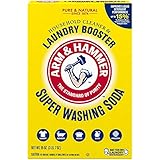
Church & Dwight Co 03020 Arm & Hammer Super...
Stronger alkaline cleaner than baking soda for the toughest grout jobs. Washing soda is sodium carbonate compared to baking soda’s sodium bicarbonate, providing higher pH alkaline cleaning power that dissolves grease and organic contamination more aggressively. Mix with warm water for a heavy-duty grout cleaning solution that tackles kitchen floor grout embedded with cooking oils.
Dissolve half a cup in a gallon of warm water for a soaking solution that covers large tile floor areas. Let the alkaline solution sit in the grout joints for fifteen to twenty minutes before scrubbing with a stiff brush. The stronger pH breaks down grease bonds faster than baking soda alone which is why professional cleaning services prefer washing soda for commercial kitchen grout.
Wear gloves when handling washing soda because the higher pH can irritate skin with extended contact during cleaning sessions. Not recommended for use on aluminum, fiberglass, or waxed surfaces because the strong alkaline chemistry can damage these materials. For the toughest grease-embedded floor grout that standard baking soda paste leaves partially cleaned, washing soda provides the extra alkaline power needed.
Top Features
- Higher pH than baking soda for more aggressive grease and organic contamination dissolution
- Dissolves in warm water creating floor-wide soaking solution for large tile area grout treatment
- Professional cleaning services prefer washing soda for commercial kitchen grout restoration
- Arm and Hammer brand quality with consistent sodium carbonate concentration for reliable results
- Tackles grease-embedded grout that standard baking soda paste leaves partially cleaned
“Detergent booster, freshens and cleans, all-natural cleaning agent for household use.”
Clorox Splash-Less Bleach
Nuclear option for white grout only. Chlorine bleach whitens severely discolored white grout faster and more dramatically than any other homemade ingredient available in your cleaning arsenal. Splash-less formula reduces mess during application along grout lines compared to standard thin bleach that splashes everywhere.
Apply bleach directly to white floor and shower grout using a squeeze bottle or applicator brush for controlled placement. Let it sit for five to ten minutes maximum before scrubbing and rinsing thoroughly with clean water. Never leave bleach on grout longer than ten minutes because extended contact can weaken cement-based grout structure over repeated applications.
Never use on colored grout because chlorine bleach permanently removes pigment creating irreversible discoloration across the entire treated area. Never mix with vinegar, baking soda paste containing peroxide, or any other cleaning agent because dangerous chemical reactions produce toxic fumes. For white grout exclusively where maximum whitening power is the goal, bleach delivers the most dramatic immediate visual transformation available.
Top Features
- Most dramatic whitening power available for severely discolored white grout restoration
- Splash-less formula reduces mess during controlled application along grout lines
- Kills mold, mildew, and bacteria on contact providing genuine disinfection alongside cleaning
- Five to ten minute application provides visible results faster than any other ingredient
- Clorox brand trusted for decades of household disinfection and whitening performance
“Splash-less bleach for whitening, disinfecting, cleaning, and stain removal.”
Spray Bottle Set Reusable
Right tools complete the recipe. Reusable spray bottles let you mix and store your homemade grout cleaning solutions for immediate access during routine maintenance sessions. Diluted vinegar spray, hydrogen peroxide solution, and washing soda mixture all need separate labeled bottles for safe organized storage under your sink.
Multiple bottles in a set let you keep different cleaning solutions ready simultaneously without mixing between uses that could create dangerous chemical reactions. Label each bottle clearly with the contents because some combinations like bleach and vinegar produce toxic chlorine gas when accidentally mixed together. Adjustable nozzles switch between fine mist for surface spray and direct stream for targeted grout line application.
Reusable bottles eliminate the ongoing plastic waste that commercial spray cleaner purchases create with every new bottle bought throughout the year. One set of quality spray bottles lasts for years of homemade cleaning solution mixing and application across every room in your home. For homeowners committed to DIY grout cleaning, proper spray bottles transform loose ingredients into ready-to-use cleaning solutions stored conveniently.
Top Features
- Multiple bottles keep different cleaning solutions separate preventing dangerous mixing accidents
- Adjustable nozzles switch between mist spray and direct stream for different application needs
- Reusable design eliminates ongoing plastic waste from commercial spray cleaner purchases
- Durable construction lasts years of regular homemade cleaning solution mixing and use
- Essential tool completing your homemade grout cleaning kit from loose ingredients to ready solutions
“Reusable spray bottles for cleaning solutions, adjustable nozzle, leak-proof design.”
Frequently Asked Questions
What Is The Most Effective Best Homemade Grout Cleaner Recipe?
The most effective best homemade grout cleaner recipe combines half a cup of baking soda, a quarter cup of hydrogen peroxide, and one tablespoon of Dawn dish soap into a thick paste. Independent testing by cleaning experts and multiple home improvement publications have confirmed this three-ingredient combination outperforms other DIY recipes consistently. The baking soda provides mild abrasive scrubbing, the hydrogen peroxide delivers oxygen bleaching, and the dish soap cuts through grease.
Apply the paste along grout lines using an old toothbrush, a grout brush, or a squeezable applicator bottle for efficient coverage. Let the paste sit on the grout for fifteen to twenty minutes to allow full penetration and chemical action within the porous material. Scrub vigorously with a stiff brush, rinse with clean water, and wipe dry for results that rival most commercial grout cleaning products.
Does The Best Homemade Grout Cleaner Work As Well As Commercial Products?
Quality homemade grout cleaners perform comparably to mid-range commercial products for most routine grout contamination types encountered in residential bathrooms and kitchens. The baking soda and hydrogen peroxide paste removes soap scum, light mold staining, body oil residue, and general dirt as effectively as commercial sprays. Independent comparison testing confirms the DIY paste matches or exceeds many commercial products at a fraction of the cost.
Where commercial products hold an advantage is on the most extreme contamination that has been embedded in grout for years without any cleaning intervention. Professional-strength acid-based cleaners like Zep Grout Brightener produce more dramatic results on severely neglected ceramic floor grout than any homemade recipe matches. For regular maintenance and moderate contamination levels, homemade cleaners deliver excellent results at dramatically lower cost.
Is The Best Homemade Grout Cleaner Safe For Natural Stone Tile?
Baking soda and hydrogen peroxide paste is generally safe for sealed natural stone tile including marble, travertine, and granite when applied carefully along grout lines. Baking soda is a mild abrasive that does not scratch polished stone surfaces and hydrogen peroxide at three percent concentration does not etch calcium-based stones. Always test on a small inconspicuous area before applying across an entire natural stone surface.
Vinegar, cream of tartar, Bar Keepers Friend, and bleach should never contact natural stone tile because the acid and chemical reactions damage these surfaces permanently. The safest homemade grout cleaner for natural stone is plain baking soda mixed with water into a paste without any acidic ingredients added. When cleaning grout on natural stone floors and showers, stick exclusively to baking soda-based recipes that avoid all acid components.
Can The Best Homemade Grout Cleaner Remove Black Mold From Shower Grout?
Hydrogen peroxide is the most effective homemade ingredient for removing visible black mold staining from shower grout surfaces safely. Spray three percent hydrogen peroxide directly onto mold-stained grout, let it sit for fifteen minutes, scrub with a brush, and rinse thoroughly. The oxidation reaction breaks down the mold structure and lifts the dark staining from within the grout pores.
For severe mold contamination, apply the full baking soda and hydrogen peroxide paste which combines the bleaching power of peroxide with the abrasive scrubbing of baking soda. Bleach also kills mold effectively on white grout but should never be the first choice because it can weaken grout with repeated use. Removing visible mold staining does not eliminate all mold organisms deep within the grout, so sealing after cleaning prevents recolonization.
How Often Should I Use The Best Homemade Grout Cleaner?
Deep cleaning with the baking soda and hydrogen peroxide paste should happen every three to six months depending on how heavily your tiled areas are used daily. Shower grout in a family bathroom used by multiple people needs quarterly deep cleaning while guest bathroom grout may only need treatment twice yearly. Kitchen floor grout near cooking areas benefits from quarterly paste treatment to address grease accumulation.
Weekly maintenance between deep cleaning sessions using diluted vinegar spray on sealed grout or a light baking soda sprinkle and quick scrub prevents buildup. This regular maintenance schedule means each quarterly deep clean takes less time and effort because contamination never reaches severe embedded levels. The key to manageable grout maintenance is consistency rather than occasional intensive restoration sessions.
Should I Mix Baking Soda And Vinegar For The Best Homemade Grout Cleaner?
Despite the dramatic fizzing reaction that looks impressively powerful, mixing baking soda and vinegar is actually one of the least effective homemade grout cleaning combinations available. The acid in vinegar reacts with the base in baking soda and they neutralize each other chemically, producing carbon dioxide gas, water, and sodium acetate. After the fizzing stops, you are left with slightly salty water that has almost no cleaning power remaining.
This is arguably the most common mistake in DIY grout cleaning because the impressive fizzing reaction convinces people something powerful is happening to their grout. In reality, each ingredient works far more effectively when used separately. Apply baking soda paste first, scrub and rinse, then follow with a vinegar spray on sealed grout for a two-step approach that preserves the cleaning power of both ingredients.
What Ingredients Should I Never Mix For The Best Homemade Grout Cleaner?
Never mix bleach with vinegar because the combination produces toxic chlorine gas that causes severe respiratory damage and can be fatal in enclosed bathroom spaces. Never mix bleach with hydrogen peroxide because the reaction creates oxygen gas and generates heat that can cause burns and container pressure buildup. Never mix bleach with ammonia because the reaction produces chloramine vapors that are extremely dangerous to inhale.
Hydrogen peroxide and vinegar should not be combined in the same container because the mixture creates peracetic acid which can irritate skin, eyes, and respiratory passages. Using them sequentially with rinsing between applications is safe, but mixing them together in one solution creates an unnecessarily aggressive compound. Always label your homemade cleaning solution bottles clearly and store them separately to prevent accidental dangerous mixing.
How Long Should The Best Homemade Grout Cleaner Sit On Grout?
The baking soda and hydrogen peroxide paste should sit on grout for fifteen to twenty minutes for optimal cleaning results before scrubbing. This dwell time allows the hydrogen peroxide to oxidize embedded organic stains while the baking soda softens the contamination bond within grout pores. Shorter dwell time reduces effectiveness while longer sitting time provides minimal additional benefit beyond twenty minutes.
OxiClean dissolved in water needs fifteen to thirty minutes of soaking time on floor grout to allow the oxygen bleach chemistry to work fully. Bar Keepers Friend requires only one to two minutes because the oxalic acid works quickly and extended contact can potentially damage grout. Bleach should never sit on grout longer than ten minutes because extended chlorine exposure weakens cement-based grout material with repeated applications.
Can The Best Homemade Grout Cleaner Whiten Yellowed Grout?
Hydrogen peroxide is the most effective homemade ingredient for whitening yellowed grout because its oxygen bleaching action specifically targets the organic compounds causing discoloration. The baking soda and hydrogen peroxide paste provides both whitening and physical stain removal simultaneously for the most comprehensive yellowed grout restoration. Apply generously, wait twenty minutes, scrub vigorously, and repeat if the first application does not achieve full whitening.
OxiClean soak solution provides an alternative whitening approach for large floor areas where paste application along every grout line is impractically time-consuming. Chlorine bleach delivers the most dramatic instant whitening on severely yellowed grout but carries the risks of grout weakening and fume exposure in enclosed spaces. For gradual whitening through regular maintenance rather than aggressive one-time treatment, monthly hydrogen peroxide spray applications progressively brighten yellowed grout.
Final Thoughts
After years of mixing, testing, and comparing every popular DIY grout cleaning recipe against both each other and commercial alternatives, one recipe consistently outperforms everything else available from your pantry. Half a cup of Arm and Hammer Baking Soda, a quarter cup of hydrogen peroxide spray, and one tablespoon of Dawn Ultra Dish Soap mixed into a thick paste delivers results that match or exceed most commercial grout cleaners at a cost of pennies per application.
For floor grout covering large areas where paste application is impractical, dissolve OxiClean in warm water for a soak-and-scrub method that covers entire rooms efficiently. Keep Bar Keepers Friend on hand for mineral and rust stains that the standard paste leaves behind on ceramic and porcelain floor grout. Whatever your grout situation demands, mastering the best homemade grout cleaner recipes saves hundreds of dollars over commercial products while delivering results your tile deserves using ingredients already sitting in your kitchen pantry.