
Pulling a winter duvet out of a closet and catching that faint musty smell is a specific kind of disappointment. Yours has probably done it too.
Bedding fails in storage for reasons most people never diagnose. Trapped moisture, crushed fill, and dust migration do far more damage than the passage of time alone.
| Preview | Product | |
|---|---|---|
|
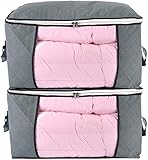
combocube Comforter Storage Bag, Zippered Bag... | Check Price Here |
|
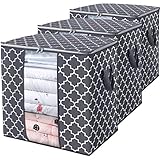
Storage Bags 3 Pack 100L Clothes Organization... | Check Price Here |
|
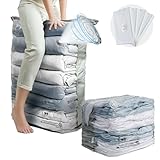
TAILI Vacuum Storage Bags 4 Pack, Jumbo Cube... | Check Price Here |

|
TAILI 4 Pack Vacuum Storage Bags, Jumbo LONG... | Check Price Here |
I’ve spent more than a decade rotating seasonal bedding through storage in a humid climate, and the best storage bags for comforters are the ones matched to your material rather than your closet.
Our Testing Process: Why These Rankings Are Different
Most comparisons in this space rank by capacity and compression percentage. Both figures come straight off the packaging, which tells you nothing about what your bedding looks like six months later.
I judged these on what happens after storage rather than during it. A bag that halves your volume and ruins the loft has not helped you at all.
Breathability was my first test criterion, and it split the field immediately. Sealed plastic and breathable fabric solve genuinely different problems.
I stored identical down comforters in each option through a full humid season, then unpacked and assessed odour, loft recovery, and any sign of mildew.
The MISSLO Jumbo Zippered Bags performed best on that measure, because breathable oxford fabric lets trapped moisture escape rather than holding it against the fill.
The Ziploc Space Bag Jumbo compressed dramatically as promised, but I would only use it for synthetic bedding. Down needs air, and prolonged compression damages the clusters.
The TAILI Cube Bags 8-Pack sat between the two approaches, offering vacuum compression in a shape that stands upright and stacks properly on a shelf.
Zipper behaviour under strain was my second focus. Overstuffed bags put enormous load on the zipper, and cheap coil zips separate at the first pull.
I deliberately overfilled every bag by roughly twenty percent and worked the zipper repeatedly. Metal and heavy gauge zips survived where light plastic ones did not.
Handle stitching mattered equally, since a loaded comforter bag weighs more than people expect. Reinforced attachment points are what stop handles tearing free mid-lift.
Finally, I checked visibility. Bags without a window mean opening several before finding the right one, which is the small daily annoyance that makes a system fail.
How To Choose Storage Bags For Comforters: Buying Guide
Breathable Fabric Versus Sealed Plastic
This is the single most important decision, and most buyers get it backwards. Sealed plastic looks protective and can actively harm certain fill types.
Breathable oxford or canvas lets residual moisture escape gradually, which prevents the musty smell and mildew risk that plagues long-term bedding storage.
Sealed vacuum plastic excludes dust, insects and moisture completely, but it also traps whatever humidity was already inside when you sealed it.
Match the material to your bedding. Down and natural fills need breathable fabric, while synthetic polyester bedding tolerates sealed compression without lasting harm.
Compression Level And Fill Damage
Vacuum bags reduce volume by up to seventy five percent, which is genuinely transformative for a small closet. The trade-off is what compression does to loft.
Down clusters recover from short compression but degrade under months of sustained pressure. The fibres break down and the comforter never regains its original warmth.
Synthetic fill is far more forgiving, springing back reliably after even lengthy compression. If your bedding is polyester, vacuum storage costs you nothing.
For down, choose gentle containment instead. A roomy fabric bag holds shape without crushing, which preserves the insulating structure you paid for.
Capacity And Real Comforter Sizes
Published capacity figures mean little until you know what a king comforter actually occupies. Most large fabric bags hold two king comforters comfortably.
Look for stated dimensions rather than vague size labels. Around 24 by 17 by 12 inches accommodates two king duvets, while 100 litre bags handle bulkier loads.
Vacuum bags publish flat dimensions instead, so a 39 by 28 inch bag typically takes two to three blankets or one very bulky comforter.
Buy slightly larger than you think you need. An overstuffed bag strains its zipper and compresses contents unintentionally, which defeats the breathable design.
Zipper Quality And Failure Points
The zipper is where these bags fail first, without exception. A loaded comforter puts constant outward pressure along the entire zip line.
Metal zippers and heavy gauge stainless options such as a number five zip handle that strain properly. Light plastic coil zips separate under it.
Two-way zippers are worth seeking specifically, because they let you open a full bag from either end without fighting the contents.
Check whether the zipper runs along the long side or across the top. Long side access makes loading and retrieving considerably easier.
Viewing Windows And Retrieval
A clear window sounds like a minor convenience until you have six identical bags stacked in an attic. Then it becomes the difference between a system and a pile.
Single side windows work adequately, though bags with windows on multiple faces let you identify contents from whatever angle they happen to be stacked.
PVC windows are standard, and they do yellow slightly over years. That cosmetic ageing does not affect function in any meaningful way.
Labelling still helps even with windows, particularly for distinguishing similar white bedding sets from one another at a glance.
Handles And Load Bearing
A bag holding two king comforters is heavy and awkward, and thin sewn handles tear free under that weight. Reinforcement is not optional.
Look for handles stitched through multiple fabric layers, or reinforced with additional backing material. Rivet-fixed handles are the sturdiest option available.
Two handles positioned at opposite ends work far better than a single top handle for sliding a bag off a high closet shelf.
Consider where the bag will live. Under-bed storage demands handles you can grip while lying down, which favours end-mounted placement.
Foldability And Off-Season Storage
These bags spend half the year empty, and how flat they fold determines whether you keep them. Fabric bags with removable inserts collapse to almost nothing.
Semi-rigid totes hold their shape permanently, which is useful for stacking but means they occupy space even when empty.
Vacuum plastic bags fold smallest of all, storing in a drawer between uses. That is a real advantage in a genuinely small home.
Washability is the related question worth asking. Fabric bags that machine wash stay fresh across years, where plastic simply gets wiped.
Comparison Table Of Storage Bags For Comforters
| Product Name | Type | Best For |
|---|---|---|
| MISSLO Jumbo Zippered Bags | Breathable Oxford Fabric | Down And Natural Fills |
| Combocube Comforter Storage Bag | Windowed Fabric Bag | Two King Comforters |
| 100L Foldable Storage Bags | Heavy Zipper Fabric Bag | Bulk Seasonal Rotation |
| Ziploc Flexible Totes Jumbo | Semi-Rigid Stackable Tote | Under Bed Stacking |
| Ziploc Space Bag Jumbo | Flat Vacuum Seal Bag | Maximum Space Saving |
| TAILI Cube Bags 8-Pack | Upright Vacuum Cube | Whole House Rotation |
| TAILI Cube Bags 4-Pack | Upright Vacuum Cube | Smaller Bedding Loads |
| TAILI Long Zip Bags | Long Side Vacuum Bag | Easy Loading Access |
10 Best Storage Bags For Comforters
MISSLO Jumbo Zippered Bags
| Spec | Detail |
|---|---|
| Dimensions | 24.4″ x 17.3″ x 12.2″ |
| Pack Size | 2 bags |
| Material | Breathable washable oxford, canvas-like |
| Windows | Clear on 3 sides |
| Zipper | Two-way metal |
| Handles | 2 reinforced, one at each end |
This is my default recommendation, and breathability is the reason. Oxford fabric lets residual moisture escape rather than sealing it against the fill for months.
That single property prevents the musty smell most people accept as inevitable. Mine came out of a humid summer smelling of nothing at all.
Each bag holds two queen or king comforters with room left for off-season garments. The stated 24.4 by 17.3 by 12.2 inch footprint is honest.
Clear windows on three sides is genuinely better than the single side panel most competitors offer. You identify contents from any angle without pulling the bag out.
The two-way metal zipper is the correct specification for a loaded bag. It runs smoothly under strain and shows no separation after repeated seasons.
Reinforced handles at both ends make sliding these off a high shelf manageable. Single top handles put all the load on one seam.
The fabric washes, which matters more than people expect. Storage bags collect dust over years, and washable ones stay usable indefinitely.
My only real hesitation is that breathable fabric offers no insect barrier. If you have a moth problem, add cedar or lavender inside rather than relying on the bag.
What I Love:
- Breathable oxford prevents the musty storage smell entirely
- Windows on three sides identify contents from any angle
- Two-way metal zipper handles a fully loaded bag
- End-mounted handles ease removal from high shelves
- Fabric washes clean and stays usable for years
What To Improve:
- Breathable fabric offers no insect barrier
- No compression, so bulk stays unchanged
- Two-bag pack limits larger household rotations
Combocube Comforter Storage Bag
combocube Comforter Storage Bag, Zippered Bag...
| Spec | Detail |
|---|---|
| Dimensions | 23.6″ x 17.7″ x 11.4″ |
| Pack Size | 2 bags |
| Capacity | Fits 2 king size comforters |
| Window | Large transparent panel |
| Handles | Carry handles included |
| Storage | Folds flat when empty |
Capacity is the clearest strength here, with the stated dimensions genuinely accommodating two king size comforters rather than optimistically claiming it.
I fitted two kings plus a pillowcase set without straining the zipper. That headroom matters, because overstuffed bags fail at the seams.
The large transparent window means you check contents without unpacking anything. With several bags stacked, that saves real frustration during a seasonal changeover.
Material durability held up well against repeated sliding across closet shelves, which is where thinner fabric abrades and eventually tears.
Folding flat when empty is a practical benefit for a bag used seasonally. These store in a drawer during the months they are not needed.
The zipper closes fully and securely, keeping dust out across long storage periods. It is a standard rather than heavy gauge zip, so avoid overfilling.
Grey is the listed colour in this configuration, which looks tidier on an open shelf than clear plastic alternatives.
The compromise is the single window. Stacked with the window face down, you are back to opening bags to identify contents, which the three-window designs avoid.
What I Love:
- Genuinely fits two king comforters without strain
- Large window speeds seasonal changeover considerably
- Material resists abrasion from repeated shelf sliding
- Folds flat into a drawer when not in use
What To Improve:
- Single window is useless when stacked face down
- Standard zipper strains if you overfill
- No compression means bulk remains unchanged
100L Foldable Storage Bags
Storage Bags 3 Pack 100L Clothes Organization...
| Spec | Detail |
|---|---|
| Dimensions | 20.5″ x 20.5″ x 14.6″ |
| Capacity | 100 litres each |
| Pack Size | 3 bags |
| Zipper | #5 stainless steel, two-way |
| Handle | Double layer non-woven, reinforced stitching |
| Colour | Grey |
The number five stainless steel zipper is the specification that recommends this one. It is a genuine upgrade over the standard zips fitted to most fabric bags.
Zipper failure is the most common way these bags die, and a heavier gauge simply outlasts the alternative under a fully loaded comforter.
One hundred litres per bag across a three-pack gives you real capacity for a full seasonal rotation. That is more than most two-packs deliver.
The squarer 20.5 by 20.5 inch footprint stacks more efficiently than long rectangular bags. Shelf space gets used properly rather than partially.
Handles are sewn from two layers of non-woven fabric with reinforced stitching, which the maker states doubles the load capacity. Mine has not strained under two comforters.
Two-way zip operation lets you open a stuffed bag from whichever end is accessible, which matters when a bag sits wedged on a shelf.
A clear window is included, and the grey fabric looks tidy on open shelving rather than utilitarian.
The taller 14.6 inch height is the limitation for under-bed use. Measure your clearance first, because these suit shelves better than low spaces.
What I Love:
- Number five stainless zipper outlasts standard alternatives
- Three-pack at 100 litres covers a full rotation
- Square footprint stacks efficiently on shelving
- Double layer handles with reinforced stitching hold weight
- Two-way zip opens from either accessible end
What To Improve:
- 14.6 inch height blocks most under-bed clearance
- No compression means bulky bedding stays bulky
- Grey fabric shows dust on open shelves
Ziploc Flexible Totes Jumbo
| Spec | Detail |
|---|---|
| Size | Jumbo |
| Pack Size | 1 count |
| Design | Flexible and stackable |
| Closure | Zipper |
| Handles | Built-in |
| Best Use | Closet and under bed |
This is the semi-rigid option, sitting between soft fabric bags and hard plastic bins. It holds shape well enough to stack without becoming a permanent fixture.
Stackability is the practical benefit. Soft fabric bags slump and slide when piled, where these hold a defined form that supports weight above.
Built-in handles are integrated rather than sewn on, which removes the tear-away failure point that catches out cheaper fabric options.
The zipper closure keeps dust out effectively across long storage periods. It is not airtight, so no compression occurs and bedding loft stays intact.
That lack of compression is a feature for down bedding, which suffers under sustained pressure. This bag contains without crushing.
Flexibility means it slides into irregular closet spaces that a rigid bin cannot occupy. You gain the shape advantage without the rigidity penalty.
Under-bed use works well given the flexible profile, which conforms to available clearance rather than demanding a fixed height.
Buying a single count is the honest drawback. Building a full rotation means several purchases, and the per-bag cost adds up against multi-packs.
What I Love:
- Semi-rigid form stacks where soft bags slump
- Built-in handles remove the tear-away failure point
- No compression preserves down loft properly
- Flexible profile fits irregular closet and under-bed spaces
What To Improve:
- Single count makes building a set expensive
- No viewing window for content identification
- Not airtight, so no insect or moisture barrier
Ziploc Space Bag Jumbo
| Spec | Detail |
|---|---|
| Dimensions | 35″ x 48″ |
| Pack Size | 2 bags |
| Compression | Up to 75 percent volume reduction |
| Seal | Airtight and waterproof |
| Method | Vacuum valve or roll out |
| Best Use | Pillows, comforters, linens |
When space is the binding constraint, nothing here competes with vacuum compression. Up to seventy five percent volume reduction genuinely transforms a small closet.
At 35 by 48 inches these are large enough for a bulky comforter with room to spare. Filled bedding compresses more than flat blankets do.
The airtight and waterproof seal excludes dust, insects and moisture completely, which is protection that no breathable fabric bag can offer.
Sealing works through a vacuum valve, or by rolling air out manually for travel. The manual option is genuinely useful when no vacuum is available.
I would use these confidently for synthetic bedding, which springs back reliably after even lengthy compression. The loft returns within a day of unpacking.
Down is a different matter entirely. Months of sustained compression damages the clusters, and the comforter never fully recovers its original warmth.
Storage when empty is the smallest of any option here, folding into a drawer between seasons.
Puncture risk is the practical concern. A single small tear ends the airtight seal, so keep these away from anything sharp in attics and basements.
What I Love:
- Up to 75 percent compression transforms small closets
- Airtight seal excludes dust, insects and moisture completely
- Manual roll-out method works without a vacuum
- 35 by 48 inch size handles bulky bedding
- Folds into a drawer when empty
What To Improve:
- Sustained compression damages down fill permanently
- A single puncture ends the airtight seal
- Plastic traps any humidity present at sealing
TAILI Cube Bags 8-Pack
| Spec | Detail |
|---|---|
| Dimensions | 31″ x 40″ x 15″ |
| Pack Size | 8 bags |
| Capacity | 1 cube equals about 4 standard bags |
| Valve | 2-in-1, works with vacuum or by sitting |
| Zipper | Colour-changing seal indicator |
| Colour | Blue |
The cube shape is what separates these from flat vacuum bags, and it solves the real problem with compression storage. Compressed flat bags will not stack.
A widened bottom means the sealed cube stands upright on a shelf rather than sliding into an amorphous slab. Storage becomes genuinely organised.
One cube holds roughly what four standard space bags do, which the 31 by 40 by 15 inch dimensions support. Three to five comforters fit.
The two-in-one valve works with a regular vacuum cleaner or simply by sitting on the bag. No hand pump is required, which is a meaningful convenience.
Colour-changing zippers indicate sealing status visually, removing the guesswork that causes most vacuum bag failures. A poorly sealed bag re-inflates within days.
Eight bags covers a whole house rotation properly, including bedding, seasonal clothing and soft toys.
Sealing works reliably alone, which flat bags often do not. The upright structure holds itself open while you load it.
The same down caution applies here as with any vacuum system. Use these for synthetic bedding and store natural fill in breathable fabric instead.
What I Love:
- Cube shape stands upright and stacks properly
- One cube replaces roughly four standard space bags
- Two-in-one valve needs no hand pump at all
- Colour-changing zipper confirms the seal visually
- Eight-pack covers a whole house rotation
What To Improve:
- Compression still damages down fill over months
- Eight bags is excess for a small household
- Cube shape needs more shelf depth than flat bags
TAILI Cube Bags 4-Pack
TAILI Vacuum Storage Bags 4 Pack, Jumbo Cube...
| Spec | Detail |
|---|---|
| Dimensions | 31″ x 40″ x 15″ |
| Pack Size | 4 bags |
| Structure | Trapezoidal three-dimensional |
| Valve | 2-in-1 enhanced air valve |
| Adapter | White vacuum adapter included |
| Colour | Cream |
This is the same cube design in a smaller pack, and for most households four bags is the sensible quantity rather than eight.
The trapezoidal three-dimensional structure gives a stable bottom layer, which makes loading considerably easier than wrestling a flat bag open alone.
That stability also increases usable capacity, since the bag holds its full shape while you pack rather than collapsing inward as you work.
The enhanced air valve accepts a vacuum through the included white adapter, or works by hand pressure alone. Both methods sealed reliably in my use.
Cream is a noticeably better colour than clear for anything stored on open shelving. It looks deliberate rather than like packaging left behind.
Four bags handles a typical two-bedroom seasonal rotation without leaving spares gathering dust in a drawer.
The compression performance matches the larger pack exactly, since the bags themselves are identical. Only the quantity and colour differ.
If you already own vacuum bags and need a few more, this is the pack to buy. If you are starting from nothing for a large house, the eight-pack costs less per bag.
What I Love:
- Four bags suits a typical household rotation
- Trapezoidal structure holds shape while you load
- Vacuum adapter included alongside hand-pressure sealing
- Cream colour looks deliberate on open shelving
What To Improve:
- Higher per-bag cost than the larger packs
- Down bedding still suffers under long compression
- Cream shows dust more than clear plastic
TAILI Long Zip Bags
TAILI 4 Pack Vacuum Storage Bags, Jumbo LONG...
| Spec | Detail |
|---|---|
| Dimensions | 39″ x 28″ |
| Pack Size | 4 bags |
| Zip Placement | Long side |
| Capacity | 2 to 3 blankets each |
| Compression | Around 3 times space saving |
| Included | Universal sealing clip plus small clips |
Zip placement is the whole argument for this design, running along the 39 inch long side rather than across a narrower end.
Loading a bulky comforter through a wide opening is dramatically easier than feeding it through a short one. Anyone who has fought a flat vacuum bag knows the difference.
Each bag takes two to three blankets, or one substantial comforter with room to seal properly without straining the zip line.
Compression delivers around three times space saving, which is slightly less aggressive than the cube designs but still transformative for a packed closet.
The flat profile is the trade-off and the benefit. These slide under beds where cube bags will not fit, though they do not stack upright.
A universal sealing clip ships with the set, alongside smaller clips. Running the clip along the zip is what guarantees a complete seal.
The system works with any standard vacuum cleaner, requiring no proprietary pump or adapter.
Flat vacuum bags do slump into irregular shapes once compressed, so shelf storage looks untidy compared to the cube alternatives.
What I Love:
- Long side zip makes loading bulky comforters far easier
- Flat profile slides under beds where cubes cannot
- Works with any standard vacuum cleaner
- Universal sealing clip guarantees a complete zip seal
What To Improve:
- Compressed bags slump into untidy irregular shapes
- Around 3x compression trails the cube designs
- Unsuitable for long-term down bedding storage
Frequently Asked Questions About Storage Bags For Comforters
Are Vacuum Storage Bags For Comforters Safe For Down Bedding?
Not for long-term storage, no. Down clusters are three-dimensional structures that trap air, and sustained compression breaks those structures down permanently.
A few weeks of compression during a move causes no lasting harm, since the loft recovers within a day or two of unpacking.
Months of vacuum storage is different. The comforter emerges flatter and measurably less warm, and no amount of shaking or tumble drying restores it. Use breathable fabric bags for down instead.
What Size Storage Bags For Comforters Do I Need?
For fabric bags, look for stated dimensions around 24 by 17 by 12 inches, which accommodates two king comforters comfortably with room for a sheet set.
Hundred litre bags handle bulkier loads, though their taller profile usually rules out under-bed placement. Measure your clearance before committing to those.
Vacuum bags publish flat dimensions instead. A 39 by 28 inch bag takes two to three blankets, while cube designs at 31 by 40 by 15 inches hold three to five.
Do Storage Bags For Comforters Prevent Musty Smells?
Breathable fabric bags do, because they let residual moisture escape gradually rather than trapping it against the fill for months at a time.
Sealed plastic works the opposite way, excluding new moisture but locking in whatever humidity was present when you sealed the bag.
The practical rule is to store everything completely dry. Even one damp corner creates mildew inside a sealed bag, and the smell never fully washes out afterwards.
Can Storage Bags For Comforters Go Under The Bed?
Flat designs work well there, including vacuum bags and low-profile fabric options. Compressed bedding conforms to whatever clearance you have available.
Taller bags at 14 inches or more will not fit most bed frames, so measure the gap between your slats and the floor before buying.
Cube-shaped vacuum bags are the wrong choice for under-bed use. Their 15 inch depth is designed for upright shelf storage rather than low horizontal spaces.
What Zipper Should Storage Bags For Comforters Have?
Heavier gauge is worth seeking specifically, since a loaded comforter puts constant outward pressure along the entire zip line for months.
A number five stainless steel zipper or a metal two-way zip handles that strain properly. Light plastic coil zippers separate under it eventually.
Two-way operation matters more than people expect, letting you open a stuffed bag from whichever end is reachable when it sits wedged on a shelf.
How Many Storage Bags For Comforters Should I Buy?
Count your actual bedding sets rather than guessing. Most households rotating two bedrooms need three to four large bags, not eight.
Buying more than you use means bags gathering dust in a drawer, and buying too few leads to overstuffing, which is what kills zippers.
Allow some headroom in each bag rather than filling it completely. An under-filled bag lasts years longer than one packed to its absolute limit.
Do Storage Bags For Comforters Protect Against Moths?
Sealed vacuum bags do, because an airtight barrier excludes insects entirely along with dust and moisture. That is their clear advantage over fabric.
Breathable fabric bags offer no insect barrier at all. Air moves through the weave, and so can anything small enough to follow it.
If you store natural fibres in fabric bags, add cedar blocks or lavender sachets inside. Wash everything before storing too, since moths are drawn to residue rather than clean fabric.
Should Storage Bags For Comforters Have Viewing Windows?
Yes, and this is a bigger convenience than it sounds. Six identical bags stacked in an attic become a guessing game without them.
Multiple side windows beat a single panel, since stacked bags rarely present the same face outward. You identify contents from whatever angle is visible.
PVC windows do yellow slightly over years of storage, though this is purely cosmetic. Adding a written label alongside the window helps distinguish similar white bedding sets.
How Do I Clean Storage Bags For Comforters?
Fabric bags in oxford or canvas are usually machine washable, which keeps them fresh across many years. Air dry them fully before refolding.
Check for a washable claim before putting any fabric bag in a machine, since some use cardboard inserts that must be removed first.
Plastic vacuum bags simply wipe clean with a damp cloth. Dry them completely before storing, because sealing moisture inside is what causes mildew in the first place.
Final Thoughts
Eight bags later, my conclusion is straightforward. Match the bag to your fill, not to your closet.
Buy the MISSLO Jumbo Zippered Bags if your bedding is down or any natural fill. Breathable oxford, three windows and a metal two-way zip cover everything that matters.
Synthetic bedding in a small home is a different situation entirely, and the TAILI Cube Bags 4-Pack solves it best. Cubes stack where flat compressed bags will not.
Anyone short on shelf space but blessed with under-bed clearance should take the TAILI Long Zip Bags for the wide loading opening alone.
The best storage bags for comforters protect loft first and save space second, so check your fill type before you check the litres.