
Capturing stunning images of celestial objects requires more than just passion for the night sky. You need equipment that combines optical excellence with practical portability for those dark sky adventures. The best portable telescopes for astrophotography allow you to travel to remote locations away from light pollution while still delivering the image quality serious photographers demand.
Whether chasing comets, photographing planetary details, or capturing distant nebulae, having lightweight yet capable equipment makes all the difference between frustration and breathtaking results.
Modern telescope manufacturers have revolutionized portable designs, creating instruments that fit in car trunks or even airline luggage without sacrificing optical performance. This guide explores carefully selected models that balance transportability with imaging capabilities for photographers at every skill level.
| Preview | Product | |
|---|---|---|

|
Celestron NexStar 8SE Computerized Telescope... | Check Price Here |

|
Celestron Travel Scope 70 Portable Refractor... | Check Price Here |
|
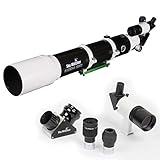
Celestron Sky Watcher Sky-Watcher EvoStar 120... | Check Price Here |
How Impact Best Portable Telescopes For Astrophotography
Quality portable telescopes have fundamentally transformed how astrophotographers approach their craft and access prime observing locations. The ability to transport serious imaging equipment to dark sky sites opens possibilities that backyard observers simply cannot achieve. Light pollution represents the primary enemy of deep-sky photography, and portable systems enable escape to pristine skies.
Modern materials and engineering have dramatically reduced telescope weight without compromising optical performance or structural integrity. Carbon fiber tubes, lightweight aluminum alloys, and compact optical designs allow substantial apertures in surprisingly portable packages. These advances mean photographers no longer choose between image quality and transportability.
Travel-friendly telescopes encourage more frequent imaging sessions since setup and breakdown become manageable tasks rather than exhausting ordeals. The psychological impact of easy portability cannot be overstated because convenience directly correlates with how often equipment actually gets used. Photographers who struggle with heavy, cumbersome systems often leave them gathering dust.
Mount stability remains critical for astrophotography since even minor vibrations ruin long-exposure images permanently. Portable systems must balance lightweight construction against the rock-solid stability that sharp stars require. Manufacturers have developed innovative solutions including collapsible tripods and compact tracking mounts that achieve remarkable stability.
The democratization of astrophotography through portable equipment has expanded the community significantly in recent years. Newcomers can now pursue this hobby without dedicated observatories or permanent installations that seemed mandatory decades ago. This accessibility has brought fresh perspectives and enthusiasm to astronomical imaging worldwide.
What is Best Portable Telescopes For Astrophotography
Selecting ideal portable astrophotography equipment requires understanding how different specifications affect both image quality and transportability simultaneously. Aperture determines light-gathering capability while focal length affects image scale and field of view for different target types. These optical characteristics must balance against practical considerations like weight and packed dimensions.
Refractor telescopes offer excellent portability due to their sealed tubes requiring no collimation maintenance during transport. Their chromatic aberration-free views through apochromatic designs make them favorites among deep-sky photographers seeking pinpoint stars. However, larger refractors become expensive and heavy quickly.
Reflecting telescopes provide substantial aperture at lower costs but require periodic optical alignment that travel can disturb. Schmidt-Cassegrain and Maksutov designs offer compact focal lengths in portable packages ideal for planetary imaging. Each optical design presents distinct advantages depending on your primary imaging targets.
Mount selection impacts image quality as significantly as the telescope itself since tracking accuracy determines achievable exposure lengths. Portable equatorial mounts have improved dramatically, offering smooth tracking in lightweight packages suitable for travel. GoTo capabilities simplify setup at unfamiliar locations where constellation recognition proves challenging.
Budget considerations naturally influence choices, but investing in quality optics pays dividends through years of satisfying images. The products below represent excellent options across various price ranges for photographers prioritizing portability.
- Celestron NexStar 8SE
- Celestron Travel Scope 70
- Sky-Watcher EvoStar 120 APO
- Celestron NexStar 6SE
- Celestron AstroMaster 130EQ-MD
- Sky-Watcher Heritage 150
- Celestron 114LCM Computerized
- Sky-Watcher EvoStar 80 APO
- Celestron StarSense Explorer DX
- William Optics RedCat 51
- Celestron Advanced VX 8 SCT
- ZWO Seestar S50 Smart
Comparison Table of Best Portable Telescopes For Astrophotography
| Product Name | Aperture | Focal Length |
|---|---|---|
| Celestron NexStar 8SE | 203mm | 2032mm |
| Celestron Travel Scope 70 | 70mm | 400mm |
| Sky-Watcher EvoStar 120 APO | 120mm | 900mm |
| Celestron NexStar 6SE | 150mm | 1500mm |
| Celestron AstroMaster 130EQ-MD | 130mm | 650mm |
| Sky-Watcher Heritage 150 | 150mm | 750mm |
| Celestron 114LCM | 114mm | 1000mm |
| Sky-Watcher EvoStar 80 APO | 80mm | 600mm |
| Celestron StarSense Explorer DX | 130mm | 650mm |
| William Optics RedCat 51 | 51mm | 250mm |
| Celestron Advanced VX 8 SCT | 203mm | 2032mm |
| ZWO Seestar S50 Smart | 50mm | 250mm |
10 Best Portable Telescopes For Astrophotography
Celestron NexStar 8SE
Celestron NexStar 8SE Computerized Telescope...
Serious astrophotographers often gravitate toward this iconic orange-tube telescope that has earned legendary status among imaging enthusiasts worldwide. The 8-inch Schmidt-Cassegrain optical system gathers impressive light while maintaining remarkable compactness through its folded optical path design. Celestron’s StarBright XLT coatings maximize light transmission for brighter, higher-contrast images of planets and deep-sky objects.
The fully computerized GoTo mount contains a database of over 40,000 celestial objects accessible through the intuitive hand controller. SkyAlign technology simplifies initial setup by requiring alignment on just three bright objects rather than specific named stars. This convenience proves invaluable at unfamiliar dark sky locations where constellation recognition may be challenging.
Despite the substantial 8-inch aperture, the entire system breaks down into manageable components fitting in vehicle trunks or dedicated carrying cases. The single-arm fork mount design, while occasionally criticized for slight vibration, dramatically reduces overall weight compared to traditional dual-arm mounts. Setup takes minutes rather than hours, encouraging spontaneous imaging sessions.
Planetary imaging with this telescope reveals stunning details including Jupiter’s cloud bands, Saturn’s ring divisions, and lunar crater floors. The long 2032mm focal length provides substantial image scale without additional Barlow lenses. Deep-sky imaging requires an equatorial wedge for proper tracking, but the optical tube can be removed and mounted on heavier-duty astrophotography mounts.
Top Features
- Large 8-inch aperture gathers over 1.5 times more light than 6-inch alternatives for brighter celestial images.
- Fully computerized GoTo system automatically locates and tracks 40,000 celestial objects with precision.
- SkyAlign technology enables quick setup by pointing at any three bright objects for alignment.
- Compact Schmidt-Cassegrain design folds 2032mm focal length into remarkably portable package.
- StarBright XLT coatings maximize light transmission for optimal image brightness and contrast.
“Celestron’s signature orange-tube telescope combines advanced features and excellent optics in one easy-to-use system, the NexStar 8SE.”
Celestron Travel Scope 70
Celestron Travel Scope 70 Portable Refractor...
Ultra-portable design defines this compact refractor that fits entirely within its included backpack for grab-and-go convenience anywhere. The 70mm aperture refractor telescope delivers surprisingly capable views of the moon, planets, and brighter deep-sky objects despite its diminutive size. Fully coated glass optics provide vivid images suitable for casual astrophotography with smartphones or lightweight cameras.
Everything required for observing fits neatly inside the custom backpack including the telescope tube, tripod, and all accessories. This complete portability makes the Travel Scope ideal for camping trips, hiking expeditions, or international travel where baggage restrictions matter. Setup requires no tools and takes mere seconds from unpacking to first light.
The included eyepieces provide both wide-field and close-up viewing options for versatile celestial exploration. A 45-degree erect image diagonal enables comfortable viewing angles while the finderscope helps locate objects quickly. The full-height tripod extends sufficiently for comfortable seated or standing observation positions.
While not designed for serious deep-sky astrophotography, this telescope captures impressive lunar images and serves as an excellent introduction to celestial imaging. The refractor design eliminates alignment requirements while providing sharp, contrasty views throughout its service life. Celestron’s software download adds educational value for learning the night sky.
Top Features
- Complete backpack system includes telescope, tripod, and all accessories for ultimate portability.
- Quick no-tool setup enables observation within seconds at any location worldwide.
- Fully coated glass optics deliver vivid images of lunar and planetary targets.
- Dual eyepieces provide versatile viewing options for both wide-field and detailed examination.
- Lightweight construction weighs only pounds for effortless transportation anywhere.
“Grab the Celestron Travel Scope 70 and go anywhere—from your backyard to another continent with ample optical performance packed and ready.”
Sky-Watcher EvoStar 120 APO
Celestron Sky Watcher Sky-Watcher EvoStar 120...
Premium apochromatic optics deliver exceptional color correction that serious deep-sky astrophotographers demand from their imaging systems. The 120mm doublet refractor utilizes extra-low dispersion glass elements that virtually eliminate chromatic aberration plaguing lesser designs. Stars remain tight pinpoints across the entire field without colored halos surrounding bright objects.
The proprietary lens combination delivers optimum visual and photographic performance from a single optical assembly design. A 10:1 dual-speed Crayford-style focuser provides smooth, precise focus adjustments essential for critical imaging applications. This focuser accommodates both visual eyepieces and heavier camera setups without slippage or image shift.
Beautiful construction features rolled steel tubing with Sky-Watcher’s signature Black Diamond metal-flake finish that looks stunning at star parties. Contrasting textured off-white aluminum castings on front and rear cells add visual appeal while providing durability. The included foam-lined aluminum hard case protects your investment during transport.
Complete accessories include an 8×50 right-angle correct-image finderscope, 2-inch dielectric diagonal, quality eyepieces, and mounting rings with dovetail. This comprehensive package means imaging can begin immediately without purchasing additional components separately. The versatile design evolves with your skills rather than requiring replacement as abilities improve.
Top Features
- Extra-low dispersion glass elements virtually eliminate chromatic aberration for pinpoint stars.
- 10:1 dual-speed Crayford focuser enables smooth, precise adjustments for critical imaging focus.
- Foam-lined aluminum hard case protects optics during transportation to dark sky sites.
- Complete accessory package includes finderscope, diagonal, eyepieces, and mounting hardware.
- Premium construction with metal-flake finish provides both beauty and durability.
“Whether you’re a seasoned astrophotographer or a budding novice, EvoStar refractors are versatile enough to use as your primary optical tube.”
Celestron NexStar 6SE
Compact computerized telescopes rarely deliver the optical quality found in this 6-inch Schmidt-Cassegrain that punches above its weight class significantly. The aperture provides excellent views of planets, bright deep-sky objects, and lunar details while remaining remarkably portable. Celestron’s proven GoTo technology locates thousands of celestial objects automatically after simple alignment procedures.
The smaller aperture compared to the 8SE model actually benefits portability-focused astrophotographers who prioritize transportation ease. The complete system including mount and tripod fits comfortably in airline-checkable luggage or compact vehicle spaces. Setup at remote dark sky locations takes minutes using the SkyAlign technology that accepts any three bright objects.
Planetary imaging with this telescope reveals impressive details including Jupiter’s Great Red Spot and Saturn’s Cassini Division during good seeing conditions. The 1500mm focal length provides substantial image scale for planetary targets without additional magnifying optics. Long-exposure deep-sky work benefits from adding an equatorial wedge for proper tracking.
The single-arm fork mount has been refined over many product generations for improved stability and smooth tracking accuracy. StarBright XLT coatings enhance light transmission while internal baffling reduces scattered light for higher contrast views. This telescope represents an excellent balance between capability and portability.
Top Features
- 6-inch aperture provides excellent light gathering in a remarkably compact, portable package.
- Fully computerized GoTo mount automatically locates and tracks celestial objects precisely.
- SkyAlign technology enables quick setup using any three bright objects for alignment.
- StarBright XLT coatings maximize light transmission for brighter, higher-contrast images.
- Compact design fits airline luggage for travel to the world’s darkest observation sites.
“The Celestron NexStar 6SE is the smallest of Celestron’s fully computerized options to actually have enough aperture for the GoTo to make sense.”
Celestron AstroMaster 130EQ-MD
Budget-conscious astrophotographers appreciate this Newtonian reflector that delivers substantial 130mm aperture at accessible pricing without sacrificing essential features. The German equatorial mount provides proper celestial tracking for planetary imaging while the motor drive maintains object centering during longer exposures. Fully coated glass optics deliver bright, clear images across the visual spectrum.
Quick no-tool setup means observation can begin within minutes of arriving at your chosen dark sky location. The adjustable steel tripod provides stable support while accommodating various viewing heights for comfortable observation positions. Slow-motion control cables enable smooth, precise tracking adjustments during visual observation or imaging sessions.
The 650mm focal length at f/5 provides a relatively fast optical system that gathers light efficiently for imaging applications. This combination works well for larger deep-sky objects while still providing adequate magnification for planetary observation. Included eyepieces offer multiple magnification options for exploring different celestial targets.
Astrophotography beginners find this telescope approachable for learning fundamental techniques including polar alignment and tracking. The Newtonian optical design may require occasional collimation, but this maintenance becomes routine with practice. Celestron’s reputation for customer support provides reassurance for newcomers to the hobby.
Top Features
- Large 130mm aperture gathers substantial light at an accessible budget-friendly price point.
- German equatorial mount with motor drive enables proper celestial tracking for imaging.
- Quick no-tool setup gets you observing within minutes at any location.
- Included slow-motion cables provide smooth, precise tracking adjustments during use.
- F/5 focal ratio creates a fast optical system ideal for deep-sky imaging applications.
“It’s harder but not impossible to find a telescope under $500 for astrophotography, and the Celestron AstroMaster 130EQ-MD is one of the best below that price point.”
Sky-Watcher Heritage 150
Collapsible Dobsonian design revolutionizes portability by shrinking this 150mm reflector into remarkably compact dimensions for transport. The innovative tube design extends for observing and collapses for storage, solving space constraints that prevent many from owning larger apertures. Despite the compact collapsed size, the full 150mm aperture delivers substantial light gathering for visual astronomy.
Tabletop Dobsonian mounting eliminates the need for heavy tripods while providing intuitive point-and-look simplicity that newcomers appreciate. The mount sits on any stable surface including picnic tables, car hoods, or dedicated astronomy tables at dark sky sites. This setup convenience encourages frequent use compared to more complex mounting systems.
The parabolic primary mirror provides sharp images across the field of view for both visual observation and basic imaging applications. Manual tracking requires periodic adjustment but teaches fundamental sky navigation skills valuable for any astronomer. The compact form factor fits easily in luggage or vehicle compartments for travel.
While designed primarily for visual astronomy, smartphone astrophotography captures impressive lunar images through this telescope. The wide field of view encompasses large celestial objects entirely within the eyepiece for dramatic views. Setup and breakdown take mere seconds, making this ideal for impromptu observation sessions.
Top Features
- Collapsible tube design dramatically reduces packed dimensions for effortless transportation.
- Substantial 150mm aperture gathers impressive light in a remarkably compact package.
- Tabletop Dobsonian mount eliminates heavy tripods while providing intuitive operation.
- Parabolic primary mirror delivers sharp images across the entire field of view.
- Innovative design enables frequent use by removing setup complexity barriers.
“The Sky-Watcher Heritage 150 Tabletop Dobsonian is perfect for beginners, easy setup, portable, and provides fun observing experiences.”
Celestron 114LCM Computerized
Computerized convenience meets substantial aperture in this Newtonian reflector designed for beginners transitioning toward serious astronomical observation. The motorized altazimuth mount automatically locates and tracks celestial objects from its extensive database containing thousands of interesting targets. SkyTour mode suggests the best objects currently visible, eliminating guesswork for newcomers.
The 114mm aperture provides enough light gathering for satisfying views of planets, the moon, and brighter deep-sky objects. Reflector optics deliver sharp images across the field when properly collimated and thermally equilibrated. The compact design and reasonable weight make transportation to dark sky sites practical.
Setup proves surprisingly straightforward thanks to NexStar technology that guides users through alignment procedures step by step. The hand controller provides intuitive access to telescope functions without requiring smartphone apps or external devices. Built-in object tours help beginners discover fascinating celestial targets they might otherwise miss.
While the altazimuth mount limits long-exposure deep-sky imaging, planetary and lunar photography produce impressive results. The short focal length provides relatively wide fields of view suitable for larger celestial objects. This telescope serves as an excellent stepping stone toward more advanced astrophotography equipment.
Top Features
- Computerized mount automatically locates and tracks thousands of celestial objects precisely.
- SkyTour mode suggests optimal viewing targets based on current sky conditions.
- 114mm aperture provides substantial light gathering for satisfying celestial views.
- Intuitive hand controller enables easy operation without external devices required.
- Compact design makes transportation to dark sky observation sites practical.
“The Celestron 114LCM Computerized Newtonian Telescope is a great choice for beginners with its SkyTour and automatic mount features.”
Sky-Watcher EvoStar 80 APO
Exceptional portability defines this compact apochromatic refractor that delivers premium optical quality in an airline-friendly package. The 80mm doublet design utilizing extra-low dispersion glass eliminates chromatic aberration for pinpoint stars and accurate colors. Astrophotographers seeking travel-friendly imaging systems find this telescope perfectly suited to their needs.
The manageable 600mm focal length provides relatively wide fields of view ideal for capturing large deep-sky objects and starfields. Paired with modest equatorial tracking mounts, this refractor produces stunning images of nebulae, galaxies, and star clusters. The fast f/7.5 focal ratio gathers light efficiently for reasonable exposure times.
Premium construction includes a dual-speed focuser for precise focus adjustments critical during imaging sessions. The compact dimensions and light weight allow mounting on smaller, more portable tracking systems. Everything fits comfortably in carry-on luggage for international dark sky travel adventures.
Visual observers appreciate the sharp, contrasty views through this quality refractor design that requires zero maintenance. The sealed tube protects optics from dust and moisture while eliminating collimation concerns entirely. This telescope represents an ideal balance between optical quality and ultimate portability.
Top Features
- Extra-low dispersion glass elements eliminate chromatic aberration for accurate star colors.
- Compact 80mm aperture fits carry-on luggage for international dark sky travel.
- Dual-speed focuser enables precise adjustments for critical imaging focus requirements.
- Sealed tube design requires zero maintenance while protecting optics from elements.
- Fast f/7.5 focal ratio gathers light efficiently for reasonable exposure durations.
“For portability, the Sky-Watcher EvoStar 80 APO Doublet Refractor represents one of the best options for traveling astrophotographers.”
Celestron StarSense Explorer DX
Revolutionary smartphone technology transforms this Newtonian reflector into an intelligent stargazing companion that guides you across the night sky. The StarSense technology uses your phone’s camera to analyze star patterns and determine exactly where the telescope points. Simply center the indicated arrow on your screen to find any object with remarkable accuracy.
The 130mm aperture provides substantial light gathering while the 650mm focal length delivers wide fields suitable for deep-sky observation. The f/5 focal ratio creates a fast optical system that works well for astrophotography applications. Quick setup without complicated alignment procedures encourages frequent use.
This telescope excels at helping users learn constellation patterns and celestial navigation through its intuitive guidance system. The app-controlled interface feels natural to smartphone-native generations while providing genuine astronomical education. Visual observation and basic imaging produce satisfying results throughout ownership.
The altazimuth mount provides stable support while remaining lightweight and portable for dark sky expeditions. No batteries or WiFi required for the smartphone dock system which works through pure optical recognition. This innovative approach represents the future of accessible amateur astronomy.
Top Features
- StarSense technology uses smartphone camera to identify star patterns and guide observation.
- 130mm aperture provides substantial light gathering for satisfying deep-sky views.
- App-controlled interface provides intuitive operation familiar to modern users.
- No batteries or WiFi required for the innovative optical recognition guidance system.
- Educational value teaches constellation recognition through interactive guided observation.
“The Celestron StarSense Explorer makes finding celestial objects incredibly easy through revolutionary smartphone-based guidance technology.”
William Optics RedCat 51
Ultra-compact astrograph design delivers professional-quality wide-field imaging in a remarkably small, lightweight package perfect for traveling photographers. The specialized Petzval optical design produces flat fields with pinpoint stars extending to image corners. At just 250mm focal length with 51mm aperture, this f/4.9 system captures stunning Milky Way panoramas.
The internal WIFD focusing system eliminates image shift that plagues lesser designs during focus adjustments between exposures. Quality construction includes a beautifully machined red aluminum tube that looks stunning while providing durability. Weighing under four pounds, this astrograph pairs perfectly with compact tracking mounts like the Star Adventurer.
Serious wide-field astrophotographers consider this telescope essential equipment for capturing large nebulae and star clouds. The fast focal ratio enables short exposures that minimize tracking errors while gathering substantial light. Results from this compact system rival much larger, heavier equipment.
The imaging circle covers full-frame sensors without vignetting, maximizing the investment in quality camera bodies. Premium optical coatings reduce reflections while enhancing light transmission throughout the optical path. This telescope represents the pinnacle of portable deep-sky imaging systems.
Top Features
- Petzval optical design produces flat fields with pinpoint stars to image corners.
- Ultra-compact package weighs under four pounds for ultimate portability anywhere.
- Fast f/4.9 focal ratio enables short exposures minimizing tracking error impact.
- Internal focusing design eliminates image shift during focus adjustments.
- Full-frame imaging circle covers large sensors without vignetting issues.
“Top-quality optics eliminate chromatic aberration, delivering pinpoint stars and vibrant colors in the William Optics RedCat 51.”
Celestron Advanced VX 8 SCT
Serious astrophotography demands serious equipment, and this 8-inch Schmidt-Cassegrain on the Advanced VX mount delivers both capability and reasonable portability. The German equatorial mount provides proper tracking for long-exposure deep-sky imaging that altazimuth mounts cannot achieve. The substantial payload capacity accommodates accessories including guide scopes and cameras.
The optical tube assembly features Celestron’s proven 8-inch Schmidt-Cassegrain design with StarBright XLT coatings for maximum light transmission. Focal reducers transform this planetary imaging powerhouse into a capable deep-sky system with wider fields of view. The 2032mm native focal length excels at planetary and lunar detail photography.
While heavier than smaller systems, the Advanced VX mount breaks down into manageable components for transportation to observing sites. The stainless steel tripod provides rock-solid stability essential for sharp long-exposure images. GoTo functionality locates objects automatically while tracking maintains centering throughout imaging runs.
Autoguider compatibility enables the precise tracking corrections that reveal faint deep-sky details in accumulated exposures. The system grows with your skills rather than requiring replacement as abilities develop. This represents a substantial step toward observatory-quality astrophotography in a transportable package.
Top Features
- German equatorial mount enables proper tracking for long-exposure deep-sky imaging.
- 8-inch aperture gathers substantial light for detailed planetary and deep-sky photography.
- GoTo functionality automatically locates and tracks celestial objects with precision.
- Autoguider compatibility enables precise tracking corrections for sharp exposures.
- Substantial payload capacity accommodates cameras, guide scopes, and accessories.
“The Celestron Advanced VX 8 SCT is rock steady and more suited for astrophotography with fabulous planetary imaging results.”
ZWO Seestar S50 Smart
Revolutionary smart telescope technology packages complete astrophotography capability into an incredibly compact, automated imaging system. This all-in-one device includes optics, camera, tracking mount, and processing software that produces stunning deep-sky images automatically. Simply set it up, select a target through the app, and watch gorgeous images develop on your screen.
The 50mm refractor aperture captures sufficient light while maintaining remarkable compactness that fits in small bags. Internal image stacking software combines exposures in real-time, revealing nebulae and galaxies within minutes of starting observation. No prior astrophotography experience required to achieve impressive results.
Smartphone control provides intuitive operation through well-designed apps available for both major mobile platforms. The integrated tracking mount keeps celestial objects centered throughout imaging sessions without manual intervention. Autofocus ensures optimal sharpness while electronic filters enhance specific imaging targets.
This telescope democratizes astrophotography by eliminating the steep learning curve traditional systems require. Families share the wonder of cosmic exploration through images appearing on connected devices. The portable form factor encourages frequent use wherever dark skies beckon.
Top Features
- Complete all-in-one system includes optics, camera, mount, and processing in compact package.
- Automatic operation produces stunning deep-sky images without prior experience required.
- Real-time image stacking reveals nebulae and galaxies within minutes of observation.
- Smartphone control provides intuitive operation through well-designed mobile applications.
- Ultra-compact design fits small bags for effortless transportation to dark sites.
“All the family can have fun using the ZWO Seestar S50 — it’s compact, lightweight and easy to use with no fuss when viewing the night sky.”
Frequently Asked Questions
What aperture works best for portable telescopes for astrophotography?
Selecting appropriate aperture for portable telescopes for astrophotography requires balancing light-gathering capability against practical transportation considerations carefully. Larger apertures collect more photons, revealing fainter details in celestial objects but increasing weight and bulk proportionally. Most portable imaging systems range from 50mm for ultra-compact astrographs to around 200mm for serious transportable setups.
Planetary astrophotography benefits significantly from larger apertures since fine surface details require both light gathering and resolution to capture effectively. Deep-sky imaging can succeed with smaller apertures since longer exposures compensate for reduced light collection capability. The key involves matching aperture to your primary imaging targets and transportation constraints.
Consider how frequently you plan to travel with equipment when making aperture decisions for your system. Larger apertures provide superior results but may discourage use if transportation becomes burdensome or complicated. Many experienced astrophotographers own multiple telescopes including compact systems specifically for travel.
What mount type provides best tracking for portable telescopes for astrophotography?
Mount selection critically impacts imaging success with portable telescopes for astrophotography since tracking accuracy determines achievable exposure lengths directly. German equatorial mounts provide proper celestial tracking that altazimuth designs cannot achieve for long-exposure deep-sky imaging. The equatorial alignment matches Earth’s rotation axis, enabling smooth tracking without field rotation.
Portable equatorial mounts have improved dramatically in recent years, offering smooth tracking in lightweight packages suitable for travel. Star tracker style mounts support camera lenses and small refractors while fitting in carry-on luggage easily. Larger portable equatorial mounts handle heavier optical tube assemblies for more serious imaging applications.
Altazimuth mounts work adequately for planetary and lunar imaging where short exposures prevent field rotation from affecting results noticeably. GoTo altazimuth systems simplify object location while providing tracking sufficient for bright target imaging. Consider your primary imaging targets when selecting mount type for portable applications.
How important is focal length for portable telescopes for astrophotography?
Focal length determines image scale and field of view, making it a crucial consideration when selecting portable telescopes for astrophotography equipment. Shorter focal lengths capture wider fields showing large nebulae, star clouds, and galaxy groups within single frames. Longer focal lengths magnify smaller targets like planets and compact deep-sky objects for detailed examination.
Wide-field imaging with short focal lengths forgives tracking errors better since star movement appears less pronounced at lower magnifications. This characteristic makes shorter focal length systems more forgiving for portable tracking mounts with limited precision. Beginning astrophotographers often achieve better results with wide-field systems initially.
Planetary imaging demands longer focal lengths, often combined with Barlow lenses, to achieve sufficient image scale for capturing surface details. The trade-off involves narrower fields that require precise tracking and good atmospheric seeing conditions. Many astrophotographers own multiple telescopes covering different focal length ranges.
Can budget telescopes produce quality images with portable telescopes for astrophotography?
Budget-conscious photographers can absolutely achieve impressive results with portable telescopes for astrophotography through careful equipment selection and technique development. Modern affordable telescopes from reputable manufacturers deliver optical quality that would have cost substantially more just years ago. The key involves understanding limitations while maximizing available capabilities.
Technique often matters more than equipment cost when producing quality astrophotography images successfully. Proper polar alignment, accurate focusing, and appropriate exposure settings improve results regardless of telescope price point. Image stacking software compensates for shorter individual exposures that modest tracking systems support.
Start with affordable equipment to learn fundamental techniques before investing heavily in premium systems. This approach develops skills that transfer directly when upgrading later while avoiding expensive mistakes common among newcomers. Many breathtaking astrophotographs emerge from surprisingly modest equipment in skilled hands.
What accessories enhance results with portable telescopes for astrophotography?
Essential accessories significantly improve imaging results with portable telescopes for astrophotography systems beyond the basic telescope and mount combination. Quality eyepieces enhance visual observation while dedicated cameras designed for astronomy capture superior images. Filters isolate specific wavelengths, improving contrast on emission nebulae or reducing light pollution effects.
Autoguiders monitor guide stars and send corrections to telescope mounts, dramatically improving tracking accuracy for longer exposures. Field flatteners correct optical aberrations that cause stars to appear elongated near image corners. Dew prevention systems including heaters and shields maintain clear optics during humid observing sessions.
Power solutions including portable batteries enable extended imaging sessions at remote dark sky locations without electrical access. Red flashlights preserve dark adaptation while allowing equipment manipulation in darkness safely. Invest in accessories gradually as your skills develop rather than purchasing everything simultaneously.
How do smart telescopes compare to traditional portable telescopes for astrophotography?
Smart telescopes represent a revolutionary approach to portable telescopes for astrophotography that dramatically simplifies the imaging process for all skill levels. These all-in-one systems integrate optics, camera, mount, and processing software into compact packages that produce impressive results automatically. Users simply select targets through smartphone apps and watch images develop.
Traditional telescopes offer more flexibility and ultimately higher image quality potential through customizable component selection. Experienced astrophotographers appreciate the control traditional systems provide over every imaging parameter. However, the learning curve for traditional astrophotography proves steep for many interested beginners.
Smart telescopes excel at making astrophotography accessible to families and newcomers who would otherwise never attempt this challenging hobby. The automated operation produces satisfying results immediately rather than requiring months of technique development. Consider your goals and desired involvement level when choosing between these approaches.
What targets work best with portable telescopes for astrophotography?
Target selection should match equipment capabilities when planning imaging sessions with portable telescopes for astrophotography systems optimally. Bright targets including the moon and planets require less tracking precision while revealing stunning details through modest apertures. Wide-field targets like star clusters and large nebulae suit shorter focal length systems perfectly.
Compact deep-sky objects including planetary nebulae and small galaxies demand longer focal lengths and precise tracking for successful imaging. Light pollution affects different targets variably, with emission nebulae and narrowband imaging performing better under suburban skies. Plan your imaging sessions around both equipment capabilities and observing conditions.
The moon offers an ideal starting target for beginning astrophotographers learning their equipment and techniques effectively. Progress to bright planets, then star clusters, before attempting challenging deep-sky targets requiring everything working perfectly. This progression builds skills systematically while maintaining enthusiasm through early successes.
How does light pollution affect portable telescopes for astrophotography results?
Light pollution represents the primary motivation for portable equipment since traveling to dark skies dramatically improves portable telescopes for astrophotography results. Urban skies wash out faint nebulae and galaxies that reveal stunning detail under darker conditions. The difference between light-polluted suburban views and pristine dark sky sites proves dramatic.
Portable equipment enables reaching dark sky locations where light pollution effects diminish substantially or disappear entirely. Even moderate travel distances often improve sky conditions significantly compared to typical backyard observing sites. Check light pollution maps when planning dark sky expeditions.
Filter technology helps mitigate light pollution effects for imaging certain targets, particularly emission nebulae responding to narrowband filtration. However, filters cannot fully replicate dark sky conditions for broad-spectrum targets like galaxies and star clusters. Portability remains the best solution for maximizing image quality.
Final Thoughts
After exploring these excellent options, my recommendation for most astrophotographers seeking portability centers on the Celestron NexStar 6SE for its outstanding balance between aperture, capability, and transportation convenience. This telescope delivers genuinely impressive planetary and lunar images while fitting in spaces that larger systems cannot accommodate. The computerized mount simplifies setup at unfamiliar dark sky locations significantly.
Budget-conscious beginners should consider the Celestron AstroMaster 130EQ-MD as an affordable entry point that teaches fundamental astrophotography techniques without significant investment. For serious wide-field imaging, the William Optics RedCat 51 delivers professional results in an incredibly compact package.
Those seeking the easiest path into astrophotography should explore the ZWO Seestar S50 smart telescope that produces stunning images automatically. Whatever your chosen best portable telescopes for astrophotography, remember that the equipment you actually use produces better results than premium gear gathering dust at home.