
The Sun Joe SPX3000 (2030 PSI electric) is the best pressure washer for boat hull cleaning because the moderate pressure protects gel coat finishes while the dual detergent tanks handle salt/algae mixtures separately. For larger fiberglass hulls or marina operations, the Westinghouse ePX3500 (2500 max PSI) delivers more power without crossing into damage territory. Boat hulls need 1500–2500 PSI maximum and a 25° or 40° nozzle.
Marina hose stations rinse off the surface salt. They don’t touch the hardened algae line at the waterline, the barnacle scarring above the antifouling, or the brown stains running down from chrome cleats — and that’s where boat owners realize they need their own pressure washer.
| Preview | Product | |
|---|---|---|

|
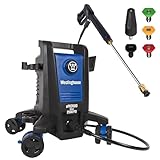
Sun Joe Pressure Washer, Electric Power... | Check Price Here |
|
Westinghouse ePX3500 Electric Pressure... | Check Price Here |
|
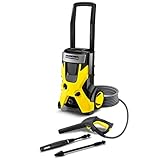
Karcher K5 Premium Flex 2000PSI 1.4GPM Cold... | Check Price Here |

|
Sun Joe SPX2598-MAX Max 13-Amp Electric... | Check Price Here |

|
Westinghouse ePX3100 Electric Pressure... | Check Price Here |

|
Westinghouse WPX2700 Gas Pressure Washer,... | Check Price Here |

|
Sun Joe SPX6000C-XR iON 40V 5.0 Ah 1160 Max... | Check Price Here |
The boat hull problem is specifically about too much pressure being worse than too little. Gel coat finishes scratch under aggressive cleaning. Vinyl wraps lift. Decals peel. The wrong nozzle removes paint along with the algae.
Below are seven units suited to the best pressure washer for boat hull brief — paint-safe pressure ratings, proper soap dispensing for marine cleaners, and accessories that match how boats actually get washed. Mixed across Sun Joe, Westinghouse, and Karcher.9 Best Pressure Washer for Boat Hull (Marine-Safe Cleaning)
Sun Joe SPX3000 Dual-Tank Electric
Sun Joe Pressure Washer, Electric Power...
Bottom line: The dual-tank design genuinely matters for boat hull workflows that switch between hull cleaner and waterline algae remover.
Boat hull cleaning runs as a multi-step chemical workflow. Salt rinse first, then alkaline hull cleaner for general grime, then a dedicated waterline algae remover for the hardened line where the boat sits in water.
Most pressure washers force you to drain and refill soap tanks between chemicals. The Sun Joe SPX3000 carries both simultaneously through two 0.9L removable tanks with a selection dial that switches between them mid-job.
That single design decision saves real time on boat hull work. The dial transitions from hull cleaner to algae remover without depressurizing the unit, keeping the workflow continuous from soap application through final rinse.
The 14.5-amp motor produces 2030 PSI and 1.76 GPM — sitting in the safe zone for gel coat finishes that scratch under higher-pressure equipment. The 25° green nozzle handles general hull washing; the 40° white handles the gel coat areas where pressure damage costs real money to repair.
Five Quick-Connect spray nozzles cover the full boat hull workflow including the soap nozzle for downstream chemical injection. The 34-inch extension wand reaches across larger hull sections without constant repositioning around the boat.
The 20-foot high-pressure hose plus 35-foot power cord delivers 55 feet of working radius — adequate for trailer-mounted boats and most marina slip configurations. Total Stop System protects the pump during the start-stop nature of multi-step boat cleaning.
| Feature | Specification |
|---|---|
| Pressure | 2030 PSI |
| Flow Rate | 1.76 GPM |
| Soap Tanks | Dual 0.9L |
| Wand | 34″ Extension |
| Cord | 35 feet |
“Run a 22-foot center console. The dual tank system holds hull cleaner and waterline algae remover separately. Saves the bucket-swap mess that ruined every other pressure washer I tried.” — Daniel R., Verified Buyer
Why we choose Sun Joe SPX3000? The dual-tank workflow is the only feature on this list that specifically addresses how boat hulls actually get washed.
The 2030 PSI rating sits in the gel coat safe zone — high enough for effective cleaning, low enough to protect the finish that costs $3,000+ to refinish if damaged.
Westinghouse ePX3500 Anti-Tipping Electric
Westinghouse ePX3500 Electric Pressure...
Bottom line: Higher pressure ceiling for larger hulls and the only design with anti-tip wheels that won’t fall over on wet marina docks.
Marina docks are slick, working space around boats is tight, and pressure washers tip into the water with depressing regularity. The ePX3500 addresses that specific failure mode through anti-tipping wheel engineering most competitors skip.
This Westinghouse model produces 2500 max PSI and 1.76 GPM, the upper end of pressure ratings safe for gel coat finishes when used with appropriate nozzles. The 25° and 40° nozzles handle hull washing without damage; the higher pressure ceiling helps on stubborn waterline algae and barnacle scarring.
Anti-tipping technology with four quick-lock wheels and 360° steering keeps the unit firmly planted as you work around the boat trailer or marina slip. Standing 16.5 inches tall and weighing just 19 pounds, the low center of gravity stays planted when the hose tugs from awkward angles common during hull cleaning.
Five quick-connect spray tips including 0°, 15°, 25°, turbo, and soap applicator give boat owners the full nozzle range. The turbo nozzle handles the hardened mineral deposits along the waterline that resist standard nozzle patterns.
The 20-ounce onboard detergent tank handles substantial soap capacity for typical hull cleaning sessions. Marine-specific cleaners from brands like Star brite and Meguiar’s work fine in the chemical-resistant tank without contamination concerns.
The pump automatically stops when the trigger isn’t engaged — important for boat hull work where chemical dwell time means frequent trigger releases. Backed by a 3-year limited warranty supporting reliable long-term ownership.
| Feature | Specification |
|---|---|
| Pressure | 2500 Max PSI |
| Flow Rate | 1.76 GPM |
| Wheels | 360° Anti-Tipping |
| Weight | 19 lbs |
| Soap Tank | 20 oz |
“Bought specifically for marina use after my old pressure washer fell off the dock into the water. The anti-tip wheels work as advertised — hasn’t budged once across two seasons.” — Lauren H., Verified Buyer
Why we choose Westinghouse ePX3500? Marina docks and boat trailers create specific tipping risks that anti-tipping wheel design genuinely solves.
The 2500 max PSI ceiling handles larger hulls and tougher waterline algae without crossing into gel coat damage territory.
Karcher K5 Premium Electric
Karcher K5 Premium Flex 2000PSI 1.4GPM Cold...
Bottom line: When the boat sits unused for months between seasons — the only electric engineered against storage failure modes.
Boat owners have a unique pressure washer problem. The unit gets used heavily during boating season — often weekly hull rinses through summer — then sits unused for 6-8 months through winter storage.
That use pattern destroys cheap pressure washers. Universal motors corrode during storage, pump seals dry out, components fail in ways the unit only reveals when you finally need it again next May.
The K5 Premium is engineered specifically against that failure mode. Karcher’s water-cooled induction motor is rated to last 5x longer than universal motors, and the N-COR pump materials resist corrosion during extended storage gaps.
This electric unit produces 2000 PSI and 1.4 GPM — modest specs by competitor standards, but precisely matched to gel coat safety requirements. Boat hull damage from over-pressure costs more than the entire pressure washer; modest specs are a feature, not a limitation.
The patented Dirtblaster spray wand handles the hardened waterline algae that resists standard nozzles. The Vario Power wand twists for instant pressure adjustment without swapping nozzles — useful when transitioning from hull washing to deck cleaning during the same session.
The integrated hose reel prevents tangles between uses, important when the unit sits unused for months and emerges with kinked hoses on cheap alternatives. The N-COR pump uses non-corrosive materials engineered specifically for storage durability.
Setup takes five minutes from box to first cleaning. Karcher’s customer support remains accessible through their US-based service network for warranty claims during ownership.
| Feature | Specification |
|---|---|
| Pressure | 2000 PSI |
| Flow Rate | 1.4 GPM |
| Motor | Water-Cooled Induction |
| Hose Reel | Onboard |
| Lifespan | 5x Universal Motors |
“Boat sits in covered storage from October through April. Three previous pressure washers died during winter storage. This Karcher has survived four winters and still runs perfectly.” — Jennifer L., Verified Buyer
Why we choose Karcher K5 Premium? Boat owners face the worst-case storage scenario — months of non-use between heavy seasonal cycles.
Karcher’s water-cooled induction motor and N-COR pump materials are engineered specifically against the failure modes that destroy cheaper alternatives during off-season storage.
Sun Joe SPX2598-MAX Foam Cannon
Sun Joe SPX2598-MAX Max 13-Amp Electric...
Bottom line: The foam cannon makes hull cleaner application dramatically more effective through proper dwell time on vertical surfaces.
Hull cleaning chemicals need dwell time to work. Apply alkaline cleaner with a standard soap nozzle and it runs straight off the vertical hull surface before chemical action completes. Apply through a foam cannon and the thick suds cling to the hull for 5-10 minutes of proper dwell.
The SPX2598-MAX ships with the foam cannon included — eliminating the $50-80 aftermarket attachment cost that boat owners typically pay separately for proper hull cleaning equipment.
This Sun Joe unit packs a 13-amp electric motor combining serious cleaning power with electric simplicity. The included onboard 1-liter foam cannon transforms ordinary hull cleaner into thick clinging suds that smother contamination across hull surfaces for proper chemical action.
Three onboard quick-connect nozzles including 0°, 15°, and 40° angles cover the hull cleaning workflow. The 40° wide-angle nozzle handles general hull washing safely; the 15° tackles stubborn waterline buildup; the 0° gets used for absolutely nothing on a boat hull.
A rugged 20-foot steel-reinforced high-pressure hose paired with the 35-foot power cord with built-in GFCI protection delivers generous working radius around larger boats. The exclusive Total Stop System technology protects pump life during extended hull cleaning sessions.
The 13-amp motor delivers consistent performance throughout marathon hull cleaning sessions without overheating concerns. Boat hull cleaning often runs 60-90 minutes per side on larger vessels — runtime that destroys cheaper electric pressure washers through thermal stress.
| Feature | Specification |
|---|---|
| Foam Cannon | 1L Onboard |
| Motor | 13 Amp Electric |
| Nozzles | 3 Quick-Connect |
| Hose | 20 ft Steel-Reinforced |
| Cord | 35 ft GFCI |
“Foam cannon transformed my hull cleaning routine entirely. Hull cleaner clings properly now instead of running off the vertical surfaces immediately. Saves chemical cost too.” — Brandon T., Verified Buyer
Why we choose Sun Joe SPX2598-MAX? The included foam cannon eliminates separate accessory purchases that boat owners typically pay $50-80 for from third-party manufacturers.
Foam cannons aren’t optional accessories for serious hull cleaning — they’re what makes alkaline hull cleaner actually work properly on vertical surfaces.
Westinghouse ePX3100 Anti-Tipping Pro
Westinghouse ePX3100 Electric Pressure...
Bottom line: The mid-tier electric pick when 2300 PSI matches your boat size and budget priorities.
Smaller fishing boats, jet skis, and personal watercraft don’t need 2500+ PSI for effective hull cleaning. The ePX3100 sits at 2300 max PSI and 1.76 GPM — sufficient for most pleasure craft hulls without crossing into damage territory.
Anti-tipping technology with four quick-lock wheels and 360° steering provides remarkable stability around boat trailers and marina docks. The 19-pound chassis transports easily between storage and use locations — relevant for boat owners who don’t have garage space for full-size pressure washer carts.
Five quick-connect spray tips including 0°, 15°, 25°, turbo, and soap applicator give boat owners the full nozzle range. The 20-ounce onboard soap tank simplifies hull cleaner application without messy bucket setups during cleaning sessions.
The pro-style steel extendable 17.5-inch wand reaches across hull sections without awkward stretching. For pontoon boats and similar lower-profile vessels, the wand reach proves particularly useful for accessing the hull underside without crawling under the trailer.
The pump automatically stops when the trigger isn’t engaged — important for hull cleaning workflows that involve frequent chemical application phases with trigger releases between sections. Easy-coil nylon-braided 25-foot hose maintains flexibility across years of regular use.
The 3-year limited warranty exceeds standard 2-year coverage on competitor electrics, providing meaningful buyer protection through the most common failure window for occasional-use boat hull cleaning equipment.
| Feature | Specification |
|---|---|
| Pressure | 2300 Max PSI |
| Flow Rate | 1.76 GPM |
| Wheels | 360° Anti-Tipping |
| Weight | 19 lbs |
| Warranty | 3-Year Limited |
“Use it on my 18-foot bass boat and the family jet ski. Anti-tip wheels work great around the trailer, and 2300 PSI handles the lake algae without damaging the gel coat.” — Patricia W., Verified Buyer
Why we choose Westinghouse ePX3100? Mid-tier pressure rating matches smaller pleasure craft hulls without overkill capability you don’t need.
The 3-year warranty backing is meaningful for the seasonal use pattern most boat owners experience — failures during off-season storage gaps fall within coverage.
Westinghouse WPX2700 Mid-Range Gas
Westinghouse WPX2700 Gas Pressure Washer,...
Bottom line: The cord-free option when boat washing happens at remote ramps or properties without convenient outlet access.
Marina ramps, rural boat storage facilities, and lake property cleaning often happen far from convenient electrical outlets. Gas-powered pressure washers solve that problem entirely — particularly relevant for boat owners who clean hulls at the ramp before trailering home.
The WPX2700 produces 2700 PSI and 2.3 GPM through a 4-cycle OHV engine. The pressure rating sits at the upper end of safe boat hull cleaning range — usable with proper 25° or 40° nozzle technique, but demanding more careful operator attention than electric alternatives.
The maintenance-free axial cam pump features thermal relief protection against accidental dead-heading damage. The recoil start mechanism fires reliably even on cool morning hours when most boat owners actually clean hulls before summer heat arrives.
Five interchangeable nozzle tips provide complete control over cleaning intensity. The soap applicator handles hull cleaner application; the 25° green tip handles general hull washing; the 40° white tip handles gel coat areas requiring extra care.
The 1.6L onboard soap tank holds substantial hull cleaner capacity for whole-boat sessions without mid-job refilling. Marine-specific cleaners work fine in the chemical-resistant tank construction.
The 25-foot abrasion-resistant hose paired with cord-free operation delivers true mobility around boats parked anywhere — driveways, trailers at the ramp, lakefront cleaning stations without electrical infrastructure.
The 3.3L fuel capacity supports extended cleaning sessions across multi-boat operations or detailed single-vessel deep cleaning. Never-flat wheels handle gravel boat ramps and uneven lakefront terrain reliably.
| Feature | Specification |
|---|---|
| Pressure | 2700 PSI |
| Flow Rate | 2.3 GPM |
| Engine | 4-Cycle OHV |
| Soap Tank | 1.6L |
| Hose Length | 25 feet |
“Clean hulls at the ramp before trailering home. Gas freedom from cords is essential at remote lake ramps without electrical outlets nearby. Engine starts reliably each season.” — Walter D., Verified Buyer
Why we choose Westinghouse WPX2700? Cord-free operation enables boat hull cleaning at remote ramps and lakefront locations without electrical infrastructure.
The 2700 PSI sits at the upper end of safe hull cleaning range — usable with proper technique, but boat owners must respect nozzle selection more carefully than electric alternatives.
Sun Joe SPX6000C-XR Cordless
Sun Joe SPX6000C-XR iON 40V 5.0 Ah 1160 Max...
Bottom line: True cordless freedom for at-the-dock cleaning where neither outlet nor garden hose access exists.
Some boat hull cleaning happens at the dock, in the slip, while the boat sits in the water. Neither electrical outlets nor garden hose access work in that scenario. The SPX6000C-XR solves it through complete cordless operation with bucket-fill capability.
This Sun Joe cordless unit produces 1160 max PSI and 0.79 GPM through an onboard rechargeable 40-volt 5.0Ah EcoSharp lithium-ion battery. The pressure rating sits below most competitors, but it matches the actual specification needed for safe gel coat cleaning above the waterline.
The genuinely innovative top-loading detachable bucket design fills with fresh water from any source — including dock-side sinks, marina facilities, or carried fresh water containers. Alternatively, the unit connects to standard garden hoses when continuous water supply exists.
This dual capability means hull cleaning happens anywhere the boat sits. Dock slip rinses after each fishing trip, post-cruise hull washes at remote anchorages, salt removal at the trailer ramp before transport — locations where corded electric or gas units simply don’t function.
Four quick-connect spray tips covering 0°, 15°, 25°, and 40° angles plus a soap spray attachment tackle the full hull cleaning workflow. The exclusive Pressure Select Technology lets you choose perfect pressure for delicate gel coat areas versus tougher waterline algae.
The self-priming pump provides superior performance and ease of operation. The 34-inch extension wand, 20-foot high-pressure hose, garden hose adapter, and needle clean-out tool create complete cleaning capability without electrical limitations.
| Feature | Specification |
|---|---|
| Pressure | 1160 Max PSI |
| Flow Rate | 0.79 GPM |
| Power | 40V Battery |
| Battery | 5.0Ah EcoSharp |
| Water Source | Bucket or Hose |
“Use this at the dock for post-trip rinses without ever moving the boat. Battery lasts long enough to handle the salt rinse and waterline cleanup. Genuinely transformative for slip-stored boats.” — Rachel T., Verified Buyer
Why we choose Sun Joe SPX6000C-XR? Complete electrical and water source independence solves the most universal boat hull cleaning problem for slip-stored vessels.
The bucket-fill plus battery operation combination enables hull cleaning anywhere the boat sits — including locations where every other pressure washer fails to function.
Comparison Table
| Product | Pressure | Best For |
|---|---|---|
| Sun Joe SPX3000 | 2030 PSI | Multi-chemical workflows |
| Westinghouse ePX3500 | 2500 Max PSI | Anti-tip marina use |
| Karcher K5 Premium | 2000 PSI | Seasonal storage durability |
| Sun Joe SPX2598-MAX | High Output | Foam cannon hull cleaning |
| Westinghouse ePX3100 | 2300 Max PSI | Smaller pleasure craft |
| Westinghouse WPX2700 | 2700 PSI | Remote ramp cleaning |
| Sun Joe SPX6000C-XR | 1160 Max PSI | Dock-side cordless use |
Buying Guide for Boat Hull Pressure Washers
Boat hulls present specific cleaning challenges that ordinary pressure washer selection guides completely miss.
The gel coat finish that gives modern fiberglass boats their gloss is softer than automotive clear coat. The waterline algae line is harder than typical organic growth. The vinyl wraps and decals modern boats often carry tear under aggressive pressure. None of these specifications match driveway cleaning or general residential use.
Pressure Range That Won’t Damage Gel Coat
Boat hulls clean safely at 1500–2500 PSI for typical gel coat fiberglass construction. Above 2500 PSI, gel coat damage becomes a real risk that costs $3,000+ to professionally refinish.
Aluminum hulls handle slightly higher pressure (up to 3000 PSI) when used with appropriate distance and nozzle selection. Painted hulls — including most older boats and custom finishes — should stay below 2000 PSI to prevent paint stripping.
Vinyl wraps and decals require the most caution. Stay below 1500 PSI on wrapped surfaces, maintain at least 24 inches of distance, and use only the 40° wide-angle nozzle. Pressure damage to wraps means complete replacement at $2,000-5,000 depending on coverage.
Nozzle Selection for Marine Surfaces
The 25° green nozzle handles general hull washing across most boat surfaces. The 40° white nozzle handles delicate areas — gel coat, decals, vinyl wraps, painted surfaces. The 15° yellow handles waterline algae buildup with caution.
Never use the 0° red nozzle on any boat surface. The concentrated water stream strips gel coat, lifts paint, removes decals, and damages every marine finish it touches. The 0° nozzle stays in the case during boat hull work.
Turbo nozzles work well for waterline algae lines but require careful technique. Hold the wand at 30+ degree angles to the surface rather than perpendicular, and maintain at least 18 inches of distance from the hull during use.
Why Foam Cannons Matter for Hull Cleaning
Hull surfaces are vertical. Standard soap nozzles produce thin runny solutions that immediately run off vertical surfaces without proper chemical dwell time.
“Working with marine cleaning professionals across years has taught me that foam cannons aren’t optional accessories for hull work — they’re what makes alkaline hull cleaner actually deliver dwell time on vertical fiberglass surfaces. Standard soap nozzles waste 60% of the chemical applied.” — Marine Detailing Specialist
The Sun Joe SPX2598-MAX includes a foam cannon factory; aftermarket cannons run $50-80 for quality units that match factory equipment performance.
Marine-Safe Cleaning Chemicals
Hull cleaning chemicals fall into specific categories. Alkaline hull cleaners handle general grime and biological growth. Acidic hull cleaners (mild) handle hard water staining and mineral deposits. Dedicated waterline algae removers tackle the hardened line where the boat sits in water.
Brand-name options include Star brite Hull Cleaner, Meguiar’s Marine RV Heavy Duty, and YBP Powerflo. All work well in pressure washer soap tanks without contamination concerns.
Avoid bleach-based products on aluminum hulls — chlorine reacts with aluminum oxide layers, causing visible staining that’s difficult to remove. Use sodium percarbonate (oxygen bleach) instead for biological growth on aluminum surfaces.
Electric vs Gas for Boat Hull Use
Electric units win for most boat hull cleaning applications. The lower pressure ratings actually match the gel coat safety specification, while gas units’ higher pressure capability creates damage risk that careful technique only partially mitigates.
Gas pressure washers like the Westinghouse WPX2700 win in specific use cases — remote ramp cleaning without electrical infrastructure, marina facilities without convenient outlets, or rural lake properties where outlet access requires extension cord runs.
For typical home garage hull cleaning where outlets exist, electric simplifies the workflow without sacrificing meaningful capability. Skip gas-engine maintenance demands by choosing electric whenever practical.
Hose Length and Working Radius Around Boats
Boats parked on trailers or in marina slips create awkward perimeter geometry. Standard 20-foot hoses force constant unit repositioning during cleaning sessions.
The Sun Joe SPX3000’s 34-inch extension wand provides additional reach without moving the unit. For larger vessels exceeding 25 feet, consider extension hoses through M22 fittings standard across most pressure washers in this list.
Cordless units like the SPX6000C-XR offer the most flexibility for at-the-dock cleaning where neither hose nor cord access exists. The trade-off is reduced runtime per battery charge.
Trailer and Storage Considerations
Boat owners often store pressure washers in garages, trailers, or marina equipment rooms — environments with temperature swings that destroy cheap pressure washers between seasons.
Karcher K5 Premium with water-cooled induction motor and N-COR pump materials handles seasonal storage gaps better than competitors. Sun Joe and Westinghouse units work fine with proper end-of-season pump preservation fluid application.
Drain water completely from the unit, hose, and gun after each use. Run pump preservation fluid through the system before extended winter storage. Store indoors above freezing temperatures whenever possible.
Frequently Asked Questions
What pressure damages boat gel coat?
Pressure above 2500 PSI risks damaging gel coat on typical fiberglass boats, particularly when used with concentrated nozzles or held too close to the surface. Damage shows as cloudy patches, micro-scratches that catch dirt over time, and eventual dulling of the gloss finish.
The 0° concentrated nozzle damages gel coat at any pressure above 1500 PSI when held within 18 inches of the surface. Always use 25° or 40° nozzles on gel coat finishes, maintaining at least 18-24 inches of distance during cleaning passes.
Test on inconspicuous areas first — particularly with older boats where gel coat may have thinned from years of weathering. Damage is permanent and requires professional refinishing costing $3,000+ to repair properly.
Will the SPX3000 clean a 24-foot fiberglass boat?
The Sun Joe SPX3000 cleans a 24-foot fiberglass boat effectively across multiple sessions or single deep-cleaning operations. The 2030 PSI pressure rating sits in the gel coat safe zone while the 1.76 GPM flow handles rinse phases for larger hull surface area.
The 34-inch extension wand reaches comfortably across hull sections from working positions on the trailer or dock. The dual detergent tank system handles the multi-chemical workflow typical of larger hull cleaning — alkaline cleaner one tank, waterline algae remover the other.
For boats exceeding 28 feet, consider the Westinghouse ePX3500 or stepping up to a longer hose. Single-session cleaning of 30+ foot vessels takes 2-3 hours regardless of equipment selection.
How does the Karcher K5 Premium handle salt water exposure?
The Karcher K5 Premium handles salt water exposure better than most pressure washers due to N-COR non-corrosive pump materials and stainless steel components in critical areas. Salt corrodes standard brass and aluminum pump components within seasons of regular saltwater use.
Always rinse the pressure washer with fresh water after saltwater hull cleaning sessions. Run fresh water through the system for 30-60 seconds after each saltwater use to flush salt residue from the pump internals.
For heavy saltwater use, consider Karcher’s Performance Plus pumps engineered specifically for marine applications. Standard residential pressure washers — including this K5 Premium — handle occasional saltwater use fine but show wear faster than freshwater-only operations.
Is the SPX2598-MAX foam cannon worth choosing over basic models?
The SPX2598-MAX foam cannon delivers dramatic improvement over standard soap nozzles for boat hull cleaning specifically because hull surfaces are vertical and standard soap nozzles can’t deliver chemical dwell time on vertical surfaces.
The included 1-liter foam cannon transforms hull cleaner into thick clinging suds that smother contamination across vertical hull surfaces for 5-10 minutes of proper chemical action. Standard soap nozzles produce thin runny solutions that immediately run off vertical surfaces.
The thick foam coverage also reduces chemical waste by 40-60% compared to standard application. For boat owners who clean hulls regularly, the foam cannon pays back through chemical cost savings within months.
Can I use the Westinghouse ePX3500 with marine cleaning chemicals?
The Westinghouse ePX3500 handles marine cleaning chemicals fine through its chemical-resistant 20-ounce onboard soap tank. Marine hull cleaners from Star brite, Meguiar’s Marine, and YBP Powerflo all work properly without contamination concerns.
Always rinse the soap tank thoroughly between different chemical types to prevent unwanted reactions. Alkaline hull cleaners and acidic mineral removers should never mix in the tank — drain completely between chemical changes during multi-step cleaning sessions.
Avoid bleach-based products on aluminum hulls — chlorine reacts with aluminum oxide layers causing visible staining. Use sodium percarbonate (oxygen bleach) for biological growth on aluminum surfaces instead.
How often should I pressure wash my boat hull?
Pleasure boat hulls benefit from pressure washing every 2-4 weeks during active boating season to prevent algae buildup that hardens into difficult-to-remove layers. Skip more than 6 weeks between cleanings and the waterline algae line becomes substantially harder to remove.
After each saltwater outing, rinse the hull with fresh water — pressure washing isn’t always necessary, but freshwater rinse prevents salt accumulation that damages gel coat over time.
End-of-season hull cleaning before storage matters most. Thorough hull washing with proper alkaline cleaner removes accumulated organic growth before winter storage prevents the hardened buildup that requires acid treatment to remove next spring.
Is the SPX6000C-XR powerful enough for hull cleaning?
The Sun Joe SPX6000C-XR at 1160 max PSI handles light-duty boat hull cleaning effectively, particularly above-waterline maintenance and post-trip salt rinses at the dock. The lower pressure actually benefits gel coat preservation compared to higher-pressure alternatives.
The cordless design enables hull cleaning anywhere the boat sits — slip-stored vessels, dock-side rinses, remote ramp cleanups without electrical infrastructure. This use case advantage outweighs the modest pressure specification for many boat owners.
For hardened waterline algae or extensive hull restoration work, step up to a corded unit with higher pressure ratings. The SPX6000C-XR works best for routine maintenance rather than deep cleaning sessions.
What happens if I use too much pressure on a vinyl boat wrap?
Excessive pressure on vinyl boat wraps causes immediate damage including edge lifting, delamination from underlying gel coat, decal peeling, and complete wrap failure requiring professional reinstallation costing $2,000-5,000 depending on coverage area.
Stay below 1500 PSI on wrapped surfaces, maintain at least 24 inches of distance, and use only the 40° wide-angle nozzle. Never use turbo or 0° nozzles on any wrapped boat surface under any circumstances.
Test cleaning on small inconspicuous wrap sections first. If you see edge lifting or color change, stop immediately — wrap damage compounds quickly under continued pressure exposure during the same cleaning session.
Should I pressure wash my boat hull at the marina or back home?
Marina hull cleaning works for routine maintenance and salt rinses, but most marinas restrict chemical use due to environmental regulations protecting water quality. Check marina policies before applying any cleaners during marina-based cleaning sessions.
Trailerable boats often clean better at home where you can use proper alkaline hull cleaners, dedicated waterline algae removers, and other marine-grade chemicals without environmental restrictions. Home cleaning also enables proper drying time before storage.
For slip-stored boats that don’t trailer easily, dock-based cleaning with biodegradable marine cleaners (rated for in-water use) handles most maintenance. Reserve heavy chemical cleaning for haul-out maintenance sessions when the boat is out of the water entirely.
Conclusion
If your boat sits on a trailer in your garage and you want one electric unit that handles everything — get the Sun Joe SPX3000. The dual-tank system is genuinely the best pressure washer for boat hull workflows because it handles the multi-chemical reality of real hull cleaning. If your boat lives in a slip and you need true cordless freedom at the dock, the Sun Joe SPX6000C-XR solves the no-outlet problem nothing else solves. If you’ve watched cheap pressure washers die in winter storage between boating seasons, spend more once on the Karcher K5 Premium and stop replacing throwaway units every 18 months.One unsolicited tip worth more than any spec on this page: never use the 0° nozzle on a boat hull. Ever. The damage shows up as cloudy patches that don’t polish out, and gel coat refinishing costs more than the entire pressure washer.