
Dealing with rusty stains on your fixtures or that metallic taste in drinking water can feel overwhelming. These common household problems often signal elevated iron and manganese levels in your water supply. Installing the right best water filter for iron and manganese transforms not only your water quality but also protects your plumbing and appliances from damage. Whether you draw water from a well or municipal source, choosing an appropriate filtration system eliminates reddish-brown staining, removes unpleasant odors, and provides crystal-clear water throughout your entire home.
Understanding which filtration technology works best requires knowledge about your specific water conditions. Most homeowners face dissolved iron ranging from 0.3 to 15 parts per million, while manganese typically appears between 0.05 to 5 ppm.
| Preview | Product | |
|---|---|---|

|
iSpring Whole House Water Filter System,... | Check Price Here |
|
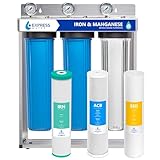
Express Water Whole House Water Filter System... | Check Price Here |

|
Max Water 3 Stage Water Filtration System for... | Check Price Here |

|
Waterdrop Whole House Water Filter System,... | Check Price Here |

|
APEC Water Systems IRON-HYDRO-10-FG Whole... | Check Price Here |

|
iSpring WGB21BM 2-Stage Whole House Water... | Check Price Here |

|
Max Water 10" 1-Stage Iron/Manganese Whole... | Check Price Here |
The solution involves specialized filter media that oxidizes these minerals and traps them before they enter your household plumbing.
How Impact Best Water Filter for Iron and Manganese
Untreated iron and manganese create numerous problems throughout residential water systems. Ferrous iron oxidizes when exposed to air, leaving stubborn rust-colored stains on bathroom fixtures, laundry, dishes, and kitchen appliances. These deposits build up inside pipes, reducing water pressure and eventually requiring costly repairs.
Manganese produces dark brownish-black staining that proves even more difficult to remove than iron deposits. Both minerals support bacterial growth within plumbing systems, creating slimy biofilms that release foul sulfur odors reminiscent of rotten eggs. This bacterial activity accelerates pipe corrosion and damages water heaters, washing machines, and dishwashers.
The presence of these contaminants affects water taste, making beverages and cooked foods unpalatable. Coffee and tea develop off-flavors, while ice cubes appear cloudy or discolored. Installing effective filtration prevents these issues while extending the lifespan of household plumbing components and water-using appliances.
Quality filtration systems utilize specialized oxidizing media such as manganese dioxide, which catalyzes the conversion of soluble iron and manganese into insoluble particles. These particles become trapped within the filter cartridge, preventing them from entering your home’s distribution system. Regular filter replacement maintains optimal performance and ensures consistently clean water throughout your residence.
What is Best Water Filter for Iron and Manganese
Selecting the right filtration system depends on understanding your water’s specific characteristics and contamination levels. Complete water testing reveals exact iron and manganese concentrations, pH levels, and the presence of additional contaminants. Systems range from simple replacement cartridges to comprehensive whole-house solutions with multiple filtration stages.
Single-stage systems work effectively for moderate contamination levels below 3 ppm iron and 1 ppm manganese. These affordable solutions replace easily and maintain adequate flow rates for most households. Multi-stage configurations handle higher contamination levels through progressive filtration, combining sediment removal, oxidation, and carbon block polishing.
Consider flow rate requirements based on household size and simultaneous water usage. Systems rated at 15 gallons per minute accommodate families with multiple bathrooms running concurrently. Installation complexity varies significantly between models, with some requiring professional plumbing modifications while others feature straightforward DIY installation with basic tools.
Maintenance requirements differ across filtration technologies. Catalytic media cartridges last considerably longer than traditional greensand filters because the media remains active throughout its service life rather than being consumed during oxidation. Budget for replacement cartridges every six to twelve months depending on contamination levels and daily water consumption.
- iSpring WGB32BM Whole House System
- Express Water Iron Manganese System
- Max Water 3-Stage Filtration
- Waterdrop Iron Manganese Filter
- APEC Iron-Hydro System
- iSpring WGB21BM Two-Stage
- Max Water Single Cartridge
- Waterdrop Replacement Cartridge
- iSpring FM25B Filter
- Max Water Replacement Pack
- Waterdrop Complete System
Comparison Table of Best Water Filter for Iron and Manganese
| Filter System | Max Iron Removal | Filter Lifespan |
|---|---|---|
| iSpring WGB32BM | 3.0 ppm | 100,000 gallons |
| Express Water | 10 ppm | 100,000 gallons |
| Max Water 3-Stage | 0.5 ppm | 30,000 gallons |
| Waterdrop System | 3.0 ppm | 80,000 gallons |
| APEC Iron-Hydro | 10 ppm | 500,000 gallons |
| iSpring WGB21BM | 3.0 ppm | 50,000 gallons |
| Max Water Single | 0.5 ppm | 30,000 gallons |
| Waterdrop Cartridge | 3.0 ppm | 26,000 gallons |
| iSpring FM25B | 3.0 ppm | 50,000 gallons |
| Max Water Pack | 0.5 ppm | 30,000 gallons |
| Waterdrop Complete | 3.0 ppm | 80,000 gallons |
11 Best Water Filter for Iron and Manganese 2026 [Tested]
iSpring WGB32BM Whole House System
iSpring Whole House Water Filter System,...
Commercial-grade construction defines this three-stage filtration powerhouse designed specifically for iron and manganese challenges. The system incorporates high-capacity polypropylene sediment removal followed by activated carbon block filtration and specialized catalytic media for oxidizing dissolved minerals. Installation requires basic plumbing skills with one-inch NPT connections that minimize pressure loss throughout your home.
Performance testing demonstrates iron reduction from 3.0 ppm down to 0.01 ppm, while manganese drops from 1.0 ppm to similarly negligible levels. The third-stage FM25B cartridge employs advanced oxidizing media that outlasts traditional greensand by threefold because catalytic action occurs without consuming the filtration material itself. This extended longevity translates to fewer cartridge changes and reduced annual maintenance costs.
Filter housings feature transparent construction for visual monitoring of cartridge condition. Pressure gauges on both inlet and outlet sides indicate when differential pressure necessitates replacement. The mounting bracket accommodates standard wall installation with provided hardware, while quick-connect fittings simplify quarterly maintenance procedures.
Flow capacity reaches 15 gallons per minute, sufficient for households with up to four bathrooms operating simultaneously. The system maintains this throughput even during peak demand periods without noticeable pressure reduction at fixtures. Each complete filter set services approximately 100,000 gallons or twelve months for typical families of four.
Top Features:
- Reduces iron concentration from 3.0 ppm to 0.01 ppm through catalytic oxidation
- Processes 100,000 gallons before requiring cartridge replacement in normal usage
- Maintains 15 GPM flow rate without pressure loss throughout the home
- Catalytic media lasts three times longer than traditional greensand due to non-consumptive oxidation
- Professional-grade transparent housings allow visual cartridge monitoring for timely maintenance
“This system completely eliminated rust stains that plagued our fixtures for years with exceptional iron-removing capabilities.”
Express Water Iron Manganese System
Express Water Whole House Water Filter System...
Engineered specifically for challenging well water conditions, this deluxe three-stage configuration tackles extreme iron and manganese contamination up to 10 ppm combined. Heavy-duty stainless steel mounting brackets provide superior stability compared to plastic alternatives, while pressure release buttons on each housing simplify filter changes without tools or mess.
Dual pressure gauges monitor system performance continuously, alerting homeowners when differential pressure exceeds normal operating range. The first stage captures sediment particles down to five microns, protecting downstream cartridges from premature clogging. Stage two employs Zeomangan media for aggressive oxidation of dissolved iron and manganese, while the final activated carbon block removes residual chlorine and organic compounds.
Installation instructions include detailed diagrams for point-of-entry mounting near water meters or pressure tanks. The system ships pre-assembled on its mounting bracket, requiring only connection to existing plumbing and minimal adjustments. NSF-certified filters meet rigorous safety standards for materials contacting potable water.
Performance data indicates capacity for 100,000 gallons per filter set, with individual cartridges replaceable as needed based on specific water conditions. The Zeomangan media handles significant contamination effectively, though pre-treatment may benefit sources exceeding higher concentrations. Carbon block polishing removes remaining taste and odor compounds.
Top Features:
- Heavy-duty stainless steel bracket provides superior mounting stability compared to plastic frames
- Handles up to 10 ppm combined iron and manganese in challenging well water applications
- Dual pressure gauges enable continuous system monitoring for optimal performance maintenance
- NSF-certified filters meet strict safety standards for materials in contact with drinking water
- Pressure release buttons simplify maintenance without requiring tools or creating spills
“After installation our laundry no longer emerges with rust stains and the metallic taste has completely disappeared from drinking water.”
Max Water 3-Stage Filtration
Max Water 3 Stage Water Filtration System for...
Compact design characterizes this three-quarter-inch system optimized for smaller households with moderate iron and manganese levels. The configuration sequences sediment removal, iron-manganese oxidation, and final carbon polishing within space-efficient ten-inch housings. Quick-connect fittings feature color-coding that simplifies installation for homeowners without extensive plumbing experience.
Purple-black iron-manganese media consists of processed ceramic zeolite granules that function effectively in closed pressure systems without requiring aeration or chemical regeneration. This natural mineral media oxidizes dissolved contaminants through catalytic action, converting them to filterable particles. The system operates effectively at pH ranges between 5.8 and 8.6 without adjustment.
Maximum recommended iron concentration reaches 0.5 ppm for optimal performance and extended filter life. Households exceeding this threshold should consider pre-treatment oxidation or systems designed for higher contamination levels. The compact footprint suits installations in confined spaces like crawl spaces or utility closets where larger systems prove impractical.
Filter lifespan extends approximately six months for typical two-person households consuming moderate daily water volumes. The clear housing design allows visual inspection of cartridge loading, helping homeowners schedule replacements before filtration efficiency degrades. All cartridges feature standard sizing for convenient replacement sourcing.
Top Features:
- Three-quarter-inch connections optimize installation in compact spaces with minimal plumbing modifications
- Color-coded quick-connect fittings simplify DIY installation without specialized tools or experience
- Ceramic zeolite media functions without chemical regeneration for maintenance-free operation
- Effective at pH levels between 5.8 and 8.6 without requiring adjustment or pre-treatment
- Clear housing permits visual cartridge monitoring for proactive replacement scheduling
“Compact size allowed installation in our cramped utility closet while quick-connect fittings made setup remarkably straightforward for plumbing novices.”
Waterdrop Iron Manganese Filter
Waterdrop Whole House Water Filter System,...
SGS laboratory testing validates this two-stage system’s ability to reduce iron by 99.3 percent and manganese by 96.8 percent. The combination of specialized iron-manganese cartridge and granular activated carbon filter delivers five-stage filtration within a streamlined two-housing configuration. Natural coconut shell carbon material removes chlorine and organic compounds while improving taste and eliminating odors.
The system withstood 100,000 water hammer tests during development, demonstrating exceptional durability under pressure fluctuations common in residential plumbing. Operating pressure range spans 25 to 90 psi without external damage or connection leakage. Pure copper connectors resist corrosion better than brass alternatives, ensuring long-term reliability.
Flow capacity reaches 15 gallons per minute without pressure loss, accommodating simultaneous operation of multiple fixtures throughout larger homes. The iron-manganese filter services approximately 80,000 gallons before replacement becomes necessary, while the GAC cartridge continues functioning for similar duration. Both cartridges feature standard sizing for universal compatibility.
Installation requires one-inch inlet and outlet connections at the main water line entry point. Pre-assembled construction on the mounting bracket streamlines setup, with included hardware sufficient for typical installations. The system design prevents rust formation and protects water-using appliances from mineral accumulation and premature failure.
Top Features:
- SGS testing confirms 99.3 percent iron reduction and 96.8 percent manganese removal under laboratory conditions
- Survived 100,000 water hammer tests demonstrating exceptional durability under pressure fluctuations
- Pure copper connectors provide superior corrosion resistance compared to standard brass fittings
- Maintains 15 GPM flow without pressure loss for households with multiple simultaneous water demands
- Natural coconut shell carbon removes chlorine and improves taste alongside mineral filtration
“Laboratory testing gave confidence before purchase and the system has performed flawlessly for months without pressure issues or staining recurrence.”
APEC Iron-Hydro System
APEC Water Systems IRON-HYDRO-10-FG Whole...
Professional-grade tank-style filtration employs oxidation-reduction reactions with high-level manganese dioxide for superior contaminant removal. This advanced system handles up to 10 ppm iron, 5 ppm manganese, and 3 ppm hydrogen sulfide without requiring chemical oxidizers or complex regeneration procedures. The pre-programmed control valve operates automatically, initiating backwash cycles based on water usage.
Broad pH tolerance between 5.0 and 9.0 eliminates pre-treatment requirements for most water sources. The system performs reliably across this range without performance degradation or premature media exhaustion. Maintenance-free operation continues for five to ten years under normal conditions, with the control valve managing all regeneration automatically.
Capacity sizing suits homes with one to two bathrooms, processing typical household volumes without frequent regeneration cycles. The filtration media bed oxidizes dissolved minerals through catalytic action, precipitating them for capture within the media bed. Periodic automatic backwashing flushes accumulated particulates to drain, maintaining filtration efficiency.
Installation complexity exceeds simpler cartridge systems, typically requiring professional plumbing for proper media bed setup and drain line connection. The pre-programmed valve requires only electrical connection and basic parameter input for commissioning. Ten-year limited warranty coverage provides peace of mind for this significant investment in water quality.
Top Features:
- Handles up to 10 ppm iron and 5 ppm manganese without chemical oxidizers or regeneration chemicals
- Functions effectively across pH range 5.0 to 9.0 eliminating pre-treatment requirements for most sources
- Pre-programmed control valve manages automatic regeneration based on household water consumption patterns
- Maintenance-free operation continues five to ten years under normal residential usage conditions
- Ten-year limited warranty protects investment in this professional-grade filtration system
“Automatic backwashing eliminates maintenance headaches while consistently clear water has been enjoyed for years without adjustments or repairs.”
iSpring WGB21BM Two-Stage
iSpring WGB21BM 2-Stage Whole House Water...
Streamlined two-stage configuration balances performance and affordability for households with moderate iron and manganese contamination. The first-stage CTO carbon block utilizes high-quality coconut shell carbon in highly compacted fabrication that removes over 90 percent of chlorine while eliminating cloudiness and objectionable tastes. Stage two employs the proven FM15B iron-manganese cartridge for mineral oxidation and capture.
Independent third-party testing verifies NSF compliance for materials and performance claims. The carbon block achieves micron-rated filtration while maintaining excellent flow characteristics. Iron reduction capability reaches 3.0 ppm down to 0.01 ppm, with manganese similarly reduced from 1.0 ppm maximum.
Pre-assembly on the mounting bracket simplifies installation for confident DIYers following detailed instructions. One-inch NPT connections accommodate standard residential plumbing with minimal pressure loss at flows up to 15 gallons per minute. The system design maintains this throughput even during peak morning demand when multiple fixtures operate simultaneously.
Filter capacity reaches 50,000 gallons per set, providing approximately one year of service for typical family of four. The catalytic media in the iron-manganese cartridge outlasts greensand alternatives by threefold due to non-consumptive oxidation mechanism. Replacement cartridges feature standard sizing available through multiple suppliers.
Top Features:
- Two-stage design balances performance and affordability for moderate contamination levels below 3 ppm
- High-quality coconut shell carbon removes over 90 percent chlorine in compact fabrication design
- Independent third-party NSF testing verifies compliance with strict materials and performance standards
- Catalytic media lasts three times longer than greensand through non-consumptive oxidation mechanism
- Pre-assembled configuration simplifies DIY installation with detailed instructions and mounting hardware
“Compact two-stage design fit perfectly in limited utility space with installation completing in less than two hours using basic tools.”
Max Water Single Cartridge
Max Water 10" 1-Stage Iron/Manganese Whole...
Economical single-stage approach suits homeowners addressing light iron contamination or supplementing existing filtration systems. The clear housing permits continuous visual monitoring of cartridge loading, indicating when replacement becomes necessary. Standard ten-inch by 2.5-inch sizing ensures universal compatibility with existing filter housings.
Iron-manganese media effectively reduces dissolved minerals in water supplies with contamination levels below 0.5 ppm. Higher concentrations overwhelm single-stage capacity, requiring more robust multi-stage configurations. The system functions optimally when installed between sediment pre-filtration and carbon post-filtration stages.
Installation simplicity ranks among this product’s strongest advantages, requiring only basic wrench for housing connection to threaded fittings. The clear housing threads onto standard brackets found in most hardware stores. Total installation time averages under 30 minutes for homeowners familiar with basic plumbing concepts.
Cartridge lifespan depends heavily on actual contamination levels and daily water consumption volumes. Typical service life reaches six months for light contamination scenarios, though visual inspection through the clear housing provides definitive replacement indication. Replacement cartridges remain affordably priced and readily available from multiple sources.
Top Features:
- Clear housing enables visual cartridge monitoring for proactive replacement before efficiency degrades
- Economical single-stage solution for light contamination below 0.5 ppm iron concentration
- Universal ten-inch by 2.5-inch cartridge sizing ensures compatibility with standard filter housings
- Simple installation requires only basic tools and minimal plumbing experience for completion
- Affordable replacement cartridges remain readily available from multiple suppliers and distributors
“Clear housing proves invaluable for monitoring cartridge condition while replacement simplicity makes maintenance completely hassle-free for non-handy homeowners.”
Waterdrop Replacement Cartridge

Waterdrop Whole House Water Filter, Iron...
Dual-layer filtration materials within this replacement cartridge effectively capture large particles, sediments, and dissolved minerals. The ten-inch by 4.5-inch sizing provides universal compatibility with most whole-house systems requiring this standard dimension. Iron reduction reaches 99.3 percent while manganese drops by 96.8 percent in controlled testing.
Six-month service life under typical conditions reduces replacement frequency compared to smaller cartridges requiring quarterly changes. The extended lifespan translates to lower annual maintenance costs while maintaining consistent filtration performance throughout the service interval. Safe materials construction ensures no contaminant leaching into filtered water.
Compatible systems include numerous major brands such as Culligan, iSpring, GE, Whirlpool, and Waterdrop’s own filter housings. The cartridge design prevents rust formation that damages household appliances and plumbing fixtures. Sediment filtration capacity protects downstream equipment from particulate accumulation and premature failure.
Installation procedure involves simple cartridge swap during routine maintenance intervals. Housing removal, old cartridge disposal, and new cartridge installation typically complete within ten minutes. No specialized tools beyond standard filter wrench prove necessary for routine replacement procedures.
Top Features:
- Dual-layer filtration materials capture sediments and dissolved minerals through progressive filtration stages
- Universal ten-inch by 4.5-inch sizing fits most major brands including Culligan, iSpring, GE, and Whirlpool
- Six-month service life reduces replacement frequency compared to quarterly-change cartridge requirements
- Safe materials construction prevents contaminant leaching into filtered water during normal operation
- Simple replacement procedure completes within ten minutes using standard filter wrench tool
“These replacement cartridges maintain consistent performance throughout six-month lifespan with universal sizing meaning never locked into single supplier.”
iSpring FM25B Filter

iSpring Whole House Water Filter Cartridge,...
Commercial-quality twenty-inch cartridge delivers high-capacity iron and manganese reduction for demanding whole-house applications. The specialized media reduces iron from maximum 3.0 ppm down to 0.01 ppm, with manganese similarly dropping from 1.0 ppm. Higher linear velocities compared to conventional media enable superior flow rates with minimal pressure drop.
Operating parameters accommodate feed water pressure from 20 to 100 psi with maximum five-psi pressure drop at eight gallons per minute flow. Temperature stability extends from 40 to 113 degrees Fahrenheit, covering normal residential water temperatures. The catalytic media remains stable across pH range 5.8 to 8.6 without performance degradation.
Filtration capacity reaches 50,000 gallons under rated conditions, though actual performance varies based on specific contamination levels and water chemistry. The media outlasts greensand by approximately three times due to catalytic rather than consumptive oxidation mechanism. This extended service life reduces replacement frequency and lowers annual operating costs.
Compatibility extends to iSpring WGB32B and WGB22B series whole-house systems plus other brands accepting twenty-inch by 4.5-inch cartridges. Technical support availability through phone and email from Atlanta headquarters assists with product selection and troubleshooting. Manufacturer backing includes responsive customer service for addressing installation questions or performance concerns.
Top Features:
- Commercial-quality construction handles demanding whole-house applications with consistent performance
- Reduces iron from 3.0 ppm to 0.01 ppm through efficient catalytic oxidation mechanism
- Maintains stable performance from 40 to 113 degrees Fahrenheit across normal residential temperature range
- Fifty-thousand-gallon capacity exceeds standard cartridges for extended service intervals between replacements
- Technical support availability through phone and email assists with selection and troubleshooting needs
“Commercial-grade construction and high-capacity performance justify premium price especially considering extended replacement intervals being experienced.”
Max Water Replacement Pack

Max Water Whole House Iron Manganese...
Three-cartridge replacement set provides convenient inventory for standard ten-inch by 2.5-inch whole-house systems. Each cartridge filters approximately 30,000 gallons, totaling 90,000 gallons of capacity across the complete pack. Purple-black iron-manganese media consists of processed ceramic zeolite effective for soluble iron and manganese removal.
The media functions in completely closed pressure systems without requiring aeration equipment or re-pumping mechanisms. Continuous regeneration operation proves most effective for water where iron removal constitutes the primary objective. Sediment pre-filtration and carbon post-filtration extend iron-manganese cartridge life while addressing residual odors.
Installation recommendation includes sediment filter before iron-manganese cartridge to prevent rapid buildup and premature pressure loss. Carbon filter following iron-manganese stage effectively addresses any unpleasant odors that may develop as the cartridge accumulates removed minerals. This three-stage configuration optimizes performance and extends overall system lifespan.
Minimum inlet pressure requirement of 60 psi ensures adequate flow rates through the dense filtration media. Users may experience slight pressure drop compared to unfiltered supply, though this remains normal for proper media function. The three-pack configuration provides substantial value compared to purchasing individual cartridges.
Top Features:
- Three-cartridge pack provides 90,000-gallon total capacity for extended replacement intervals and cost savings
- Purple-black ceramic zeolite media removes soluble iron and manganese through effective catalytic oxidation
- Functions in closed pressure systems without aeration eliminating complex equipment requirements
- Compatible with standard ten-inch by 2.5-inch housings found in most residential whole-house systems
- Three-pack configuration offers superior value compared to individual cartridge purchases over time
“Buying the three-pack saved money while ensuring replacement cartridges always remain on hand when time comes for routine maintenance.”
Waterdrop Complete System
Waterdrop Whole House Water Filter System,...
Comprehensive two-stage filtration delivers five-stage purification through advanced cartridge design. Iron reduction reaches 99.3 percent while manganese drops by 96.8 percent according to rigorous SGS testing. Natural coconut shell carbon in the GAC filter removes chlorine and organic compounds while eliminating taste and odor issues.
Durability testing included 100,000 water hammer cycles confirming structural integrity under pressure fluctuations. Operating pressure range spans 25 to 90 psi without external damage or connection failures. The system maintains 15 gallons per minute flow capacity without pressure loss, accommodating larger households with multiple simultaneous water demands.
Filter lifespan extends to approximately six months for both iron-manganese and GAC cartridges under typical usage. Extended replacement intervals reduce maintenance burden and annual operating costs compared to systems requiring quarterly cartridge changes. Pure copper connectors resist corrosion better than standard brass, ensuring long-term reliability.
Pre-assembled mounting bracket streamlines installation with included hardware and detailed instructions. One-inch inlet and outlet connections accommodate standard residential plumbing at main water line entry points. The system protects household appliances from mineral accumulation while preventing rust staining on fixtures and laundry.
Top Features:
- Comprehensive five-stage filtration within two-housing design maximizes efficiency while minimizing installation footprint
- SGS testing validates 99.3 percent iron and 96.8 percent manganese removal under controlled laboratory conditions
- Withstood 100,000 water hammer cycles during testing demonstrating exceptional durability under stress
- Pure copper connectors provide superior corrosion resistance ensuring long-term system reliability
- Six-month filter lifespan reduces maintenance frequency compared to quarterly replacement requirements
“Complete system arrived fully assembled and ready for installation while delivering consistently excellent water quality for months now.”
Frequently Asked Questions About Best Water Filter for Iron and Manganese
What makes iron and manganese problematic in household water supplies?
Iron and manganese cause numerous practical problems beyond cosmetic staining. When dissolved iron oxidizes after exposure to air, it creates rust-colored deposits on every surface the water contacts. These stains appear on bathroom fixtures, toilets, sinks, and shower enclosures, requiring aggressive cleaning with specialized removers. Laundry emerges from washing machines with permanent rust discoloration, particularly affecting white fabrics.
Manganese produces dark brownish-black stains even more difficult to remove than iron deposits. Both minerals accumulate inside pipes, progressively narrowing the internal diameter and reducing water pressure throughout your home. Water heaters suffer accelerated deterioration as minerals precipitate onto heating elements, decreasing efficiency and shortening equipment lifespan. Dishwashers and washing machines experience similar premature failure from mineral buildup.
These contaminants affect water taste significantly, imparting metallic flavors that make beverages unpalatable. Coffee and tea develop off-tastes, while cooking water affects food flavor. Ice cubes appear cloudy or discolored. Iron and manganese also support bacterial growth within plumbing systems, creating slimy biofilms that release hydrogen sulfide gas with its characteristic rotten egg odor.
The bacteria consuming these minerals accelerate corrosion of metal pipes and fittings. This bacterial activity creates an ongoing maintenance challenge even after installing filtration, as existing biofilms within pipes continue harboring these organisms. Comprehensive treatment requires both filtration for incoming water and periodic sanitization of distribution plumbing to eliminate established bacterial colonies.
How do whole house filters remove iron and manganese from water?
Effective iron and manganese removal relies on oxidation followed by physical filtration. Dissolved ferrous iron and manganous manganese exist in clear, soluble form when groundwater reaches your home. Specialized filter media containing manganese dioxide acts as a catalyst, accelerating oxidation that converts these dissolved minerals into insoluble particles that become trapped within the filter.
This catalytic oxidation occurs as water passes through the media bed. The manganese dioxide remains unchanged during this process, explaining why catalytic media lasts considerably longer than traditional greensand that gets consumed during oxidation. Once oxidized, the iron and manganese particles become large enough for mechanical filtration to capture them before water enters your household plumbing.
Some advanced systems incorporate pre-oxidation stages using air injection or chemical oxidizers like chlorine to initiate mineral conversion before reaching the filter media. This pre-treatment proves particularly effective for high contamination levels exceeding 3 ppm iron or 1 ppm manganese. The combination of chemical oxidation and catalytic media oxidation handles challenging water conditions that overwhelm simpler systems.
Multi-stage configurations typically include sediment pre-filtration to protect the iron-manganese media from particulate clogging. Carbon post-filtration removes any residual chlorine from pre-treatment while polishing water taste and eliminating odors. This progressive approach maximizes filter media life while ensuring consistently high-quality water throughout your home.
What iron and manganese levels require treatment in residential water?
Water quality standards classify iron and manganese as secondary contaminants because they create aesthetic problems rather than direct health risks. Regulatory guidance suggests treating water exceeding 0.3 parts per million for iron or 0.05 ppm for manganese. These thresholds represent levels where staining and taste issues become noticeable to most households.
However, many homeowners choose treatment at lower concentrations to prevent any staining or taste issues. Even 0.1 ppm iron can cause light rust staining over time, particularly on white porcelain fixtures and fabrics. Manganese produces visible staining at slightly lower concentrations than iron due to its darker coloration.
Testing your water reveals exact contamination levels, allowing appropriate system selection. Simple home test kits provide rough estimates suitable for initial assessment. Professional laboratory testing delivers precise measurements including the specific form of iron or manganese present. Some iron exists in organic complexes or as bacterial biomass rather than dissolved minerals, requiring different treatment approaches.
Well water typically contains higher iron and manganese concentrations than municipal supplies, though exceptions exist. Groundwater drawn from certain geological formations naturally dissolves these minerals as it percolates through rock and soil. Municipal water treatment usually removes these contaminants before distribution, though older infrastructure may leach iron from aging pipes.
Can filters address both iron bacteria and dissolved minerals simultaneously?
Iron bacteria create unique challenges beyond simple mineral filtration. These microorganisms derive energy from oxidizing dissolved iron, producing thick slimy biofilms within pipes and appliances. The biofilm protects bacteria from chlorine and other sanitizers, making eradication difficult once established. While filtration removes dissolved iron preventing new bacterial growth, existing colonies within plumbing require additional treatment.
Shock chlorination of well systems and household plumbing eliminates established iron bacteria populations. This process involves introducing high chlorine concentrations throughout the distribution system, allowing extended contact time to penetrate biofilms. Following chlorination, thorough flushing removes dead bacteria and biofilm debris. Installing filtration afterward prevents recontamination from incoming water.
Some advanced systems incorporate continuous chlorination or ozone injection for ongoing bacterial control. These oxidizers not only kill bacteria but also assist with iron and manganese oxidation before filtration. The combination of disinfection and physical removal provides comprehensive protection against both dissolved minerals and biological contamination.
Periodic maintenance of filters becomes critical when iron bacteria are present. The slimy biofilm can coat filter media, reducing effectiveness and creating breeding grounds for continued bacterial activity. More frequent cartridge replacement or media regeneration prevents these issues while maintaining system performance. Consider professional water treatment consultation when dealing with confirmed iron bacteria contamination.
How often should iron and manganese filter cartridges require replacement?
Replacement frequency depends on several interrelated factors including contamination levels, daily water consumption, and cartridge capacity. Manufacturers typically rate cartridges for specific gallon capacity or time period, whichever arrives first. Standard residential cartridges commonly last six to twelve months for households with moderate contamination and typical consumption.
Higher iron and manganese concentrations exhaust filter capacity more rapidly. Water testing revealing 3 ppm iron will consume filtration capacity three times faster than 1 ppm iron at identical consumption rates. Larger households using more water daily also reach capacity limits sooner than smaller families. Tracking water consumption helps predict replacement timing accurately.
Visual monitoring through clear filter housings reveals media loading before complete exhaustion. As cartridges capture oxidized minerals, the media darkens from rust-colored accumulation. Significant pressure drop across the filter indicates clogging from trapped particles. Most systems include pressure gauges showing when differential pressure exceeds normal operating range.
Establishing a regular replacement schedule prevents complete cartridge exhaustion that allows contaminant breakthrough. Some homeowners prefer replacing cartridges on a fixed schedule regardless of visual indicators, ensuring consistent water quality. Keeping spare cartridges in inventory eliminates downtime when replacement becomes necessary. Record keeping helps refine replacement intervals based on actual experience rather than manufacturer estimates.
Do these filters remove other contaminants besides iron and manganese?
Comprehensive whole-house systems address multiple contaminants simultaneously through staged filtration. Sediment filters remove particulates, rust flakes, sand, silt, and other suspended solids protecting downstream cartridges and household fixtures. These pre-filters typically capture particles down to five microns, though some systems utilize finer one-micron sediment filtration.
Activated carbon stages remove chlorine, volatile organic compounds, pesticides, herbicides, and industrial solvents. Carbon filtration also eliminates objectionable tastes and odors including the sulfur smell associated with hydrogen sulfide. High-quality coconut shell carbon provides superior adsorption capacity compared to cheaper coal-based alternatives.
Some systems incorporate additional stages for specific contaminants. Reverse osmosis membranes remove dissolved salts, heavy metals, and microscopic pathogens. Ultraviolet sterilization kills bacteria, viruses, and other microorganisms without chemicals. Specialized media handles specific problems like arsenic, lead, or nitrates requiring targeted treatment approaches.
However, basic iron-manganese filters focus primarily on these two contaminants. While sediment and carbon stages provide ancillary benefits, they don’t address heavy metals, fluoride, or biological contaminants requiring dedicated treatment. Complete water testing identifies all present contaminants, allowing selection of appropriate filtration technologies. Multi-contaminant challenges often necessitate combining several treatment methods for comprehensive water quality improvement.
Will these filtration systems reduce water pressure throughout my home?
Properly sized whole-house filtration systems maintain adequate pressure throughout residential plumbing. Quality systems rated at 15 gallons per minute handle simultaneous operation of multiple fixtures without noticeable pressure reduction. Most households require peak flows between 8 to 12 GPM during morning routines when showers, toilets, and kitchen faucets operate concurrently.
Initial pressure drop of 2 to 5 psi represents normal operation for new filter cartridges. This minimal reduction remains imperceptible during typical water usage. As cartridges accumulate trapped minerals, pressure drop gradually increases until replacement becomes necessary. Monitoring differential pressure gauges indicates when cartridges approach exhaustion.
Undersized systems create problematic pressure loss affecting shower performance, toilet filling, and appliance operation. Installing three-quarter-inch systems in homes requiring one-inch capacity restricts flow rates unacceptably. Proper sizing requires calculating peak demand based on fixture count and simultaneous usage patterns. Professional plumbers assist with accurate capacity determination for complex installations.
Installation location affects pressure maintenance throughout distribution systems. Mounting filters immediately after the pressure tank or main shutoff valve ensures filtered water reaches all fixtures. Long pipe runs between filter and fixtures waste pressure through friction losses. Minimizing distance and using appropriately sized distribution piping maintains adequate pressure at the furthest fixtures.
Can DIY homeowners install these systems without professional help?
Installation complexity varies significantly between different filtration technologies. Simple cartridge-based systems with quick-connect fittings accommodate confident DIYers following detailed instructions. These systems typically require basic tools including adjustable wrenches, pipe cutters, and Teflon tape. Total installation time averages two to four hours for homeowners with modest plumbing experience.
Tank-style systems with automatic control valves increase installation complexity substantially. These configurations require electrical connections for the control valve, drain line installation for backwash discharge, and precise media bed setup. Professional installation ensures proper commissioning and prevents expensive mistakes during initial setup. The added installation cost protects your significant investment in equipment.
Consider your comfort level with plumbing modifications before attempting DIY installation. Successful installation requires shutting off main water supply, cutting into existing pipes, installing new connections, and testing for leaks. Mistakes can cause water damage requiring expensive repairs. Homeowners lacking confidence should hire licensed plumbers familiar with water treatment equipment.
Building codes in some jurisdictions require licensed plumber installation for whole-house filtration systems. Permits may be necessary depending on local regulations and the extent of plumbing modifications. Professional installation often includes warranty coverage and service guarantees unavailable with DIY projects. Evaluate total costs including your time value when deciding between professional and self-installation approaches.
What maintenance do iron and manganese filters require?
Routine maintenance centers on timely cartridge replacement according to manufacturer specifications. Most systems recommend replacement every six to twelve months depending on contamination levels and water consumption. Visual inspection through clear housings indicates actual cartridge condition more accurately than calendar-based schedules. Darkened media and increased pressure differential signal replacement necessity.
Cartridge replacement involves shutting off water supply, releasing housing pressure, unscrewing filter housings, removing old cartridges, and installing new ones. The process typically completes within 20 to 30 minutes once you become familiar with procedures. Always keep spare cartridges in inventory to avoid downtime during unexpected early replacement.
Some systems require periodic sanitization to prevent bacterial growth within filter housings. This involves removing cartridges, cleaning housings with dilute bleach solution, thorough rinsing, and reassembly with new cartridges. Annual sanitization maintains hygienic conditions and prevents biofilm development that reduces filtration efficiency.
Tank-style systems with automatic regeneration require minimal hands-on maintenance beyond periodic salt addition for water softeners or media bed replacement every five to ten years. The control valve manages regeneration cycles automatically based on water usage. Annual inspections verify proper valve operation and check for salt bridging or other issues requiring attention. Professional service contracts provide peace of mind for homeowners preferring hands-off maintenance approaches.
How much do quality iron and manganese filtration systems typically cost?
Entry-level single-stage systems start around sixty to one hundred dollars for basic cartridge housings and filters. These economical solutions suit light contamination scenarios and smaller households with modest water consumption. Annual replacement cartridge costs add another forty to eighty dollars depending on brand and capacity.
Mid-range two-stage and three-stage whole-house systems range from three hundred to six hundred dollars for complete installations. These configurations handle moderate to heavy contamination while maintaining excellent flow rates. Annual maintenance costs including replacement cartridges typically total one hundred fifty to two hundred fifty dollars.
Professional-grade tank systems with automatic regeneration represent significant investments ranging from fifteen hundred to three thousand dollars depending on capacity and features. Installation costs add another five hundred to one thousand dollars for professional setup. However, these systems offer five to ten year service life with minimal maintenance requirements, potentially providing better long-term value.
Consider total cost of ownership including equipment purchase, installation, replacement cartridges, and ongoing maintenance. Cheaper systems requiring frequent cartridge replacement may cost more annually than initially expensive systems with extended service intervals. Calculate five-year total costs when comparing different technologies and brands. Factor in water quality improvements, appliance protection, and reduced cleaning effort when evaluating overall value proposition.
Final Thoughts
After extensive research into various filtration technologies, choosing the right best water filter for iron and manganese depends heavily on your specific water conditions and household needs. For moderate contamination levels below 3 ppm iron, the iSpring WGB32BM provides exceptional value with its three-stage design and extended filter life. Households facing severe contamination exceeding 10 ppm should seriously consider the APEC Iron-Hydro tank system despite its higher initial investment.
Budget-conscious homeowners with light contamination find excellent results with the Max Water single-stage cartridge or the compact three-stage system. These economical solutions deliver reliable performance without breaking the bank. Remember that professional water testing reveals your exact contamination levels, allowing informed decisions rather than guesswork.
Whatever system you choose, consistent maintenance ensures optimal performance and protects your investment. Keep spare cartridges on hand, monitor pressure gauges regularly, and replace filters before complete exhaustion. Your family deserves clean, clear water free from metallic tastes and rust stains. Take action today to transform your water quality permanently.